The Daily Skincare Habits That Matter More Than Having a Long Routine
In the contemporary beauty landscape, we are often inundated with the notion that a ten-step regimen is the gold standard for achieving a flawless complexion. From essences and ampoules to multiple layers of serums, the industry has long championed the idea that more is inherently better. However, as we look closer at the physiological needs of the dermis, we find that consistency and fundamental habits significantly outweigh the sheer volume of products applied. A long routine is only as effective as the foundational behaviors supporting it. If those habits are absent, even the most expensive luxury treatments will fail to deliver lasting results.
We believe that the shift toward skinimalism is not merely a passing trend but a necessary correction in how we approach dermatological health. The skin is a complex, self-regulating organ that functions best when its natural processes are supported rather than overwhelmed. By focusing on high-impact daily habits, we can maintain the integrity of the moisture barrier, prevent premature aging, and ensure a radiant glow without spending hours in front of the mirror. This comprehensive guide explores the essential practices that provide the greatest return on investment for your skin's long-term vitality.
Prioritizing Consistency Over Complexity in Skin Health
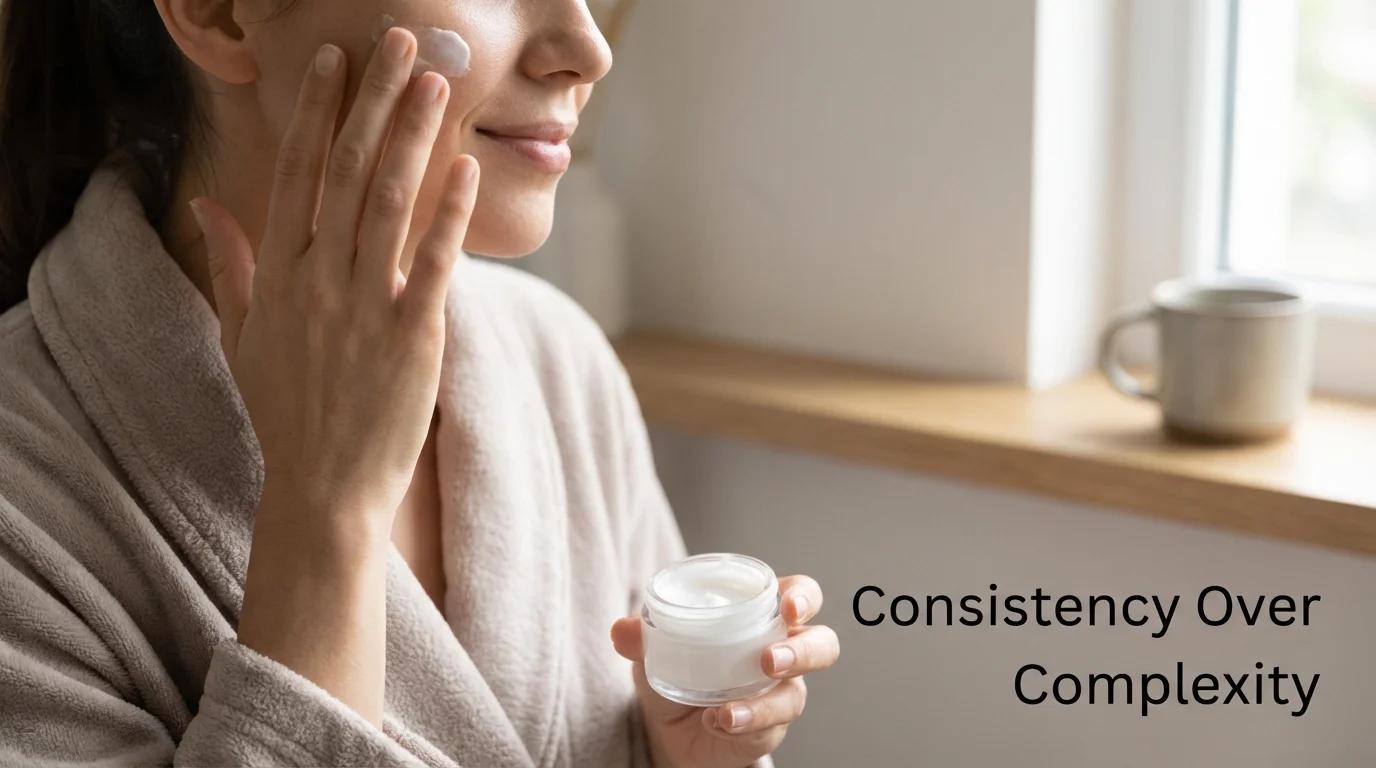
Person applying moisturizer consistently as part of a daily skincare habit.
The most significant factor in the success of any dermatological intervention is regularity. We often see individuals invest in potent active ingredients, such as retinoids or vitamin C serums, only to use them sporadically. The skin operates on a circadian rhythm and a cellular turnover cycle that spans approximately 28 to 40 days. To influence these biological processes, the application of supportive ingredients must be persistent. A simple three-step routine performed every single morning and night will invariably produce better results than an exhaustive twelve-step routine performed only twice a week.
When we commit to a streamlined routine, we reduce the likelihood of "skincare fatigue." Complexity often leads to burnout, causing individuals to skip essential steps like cleansing or sun protection when they are tired or busy. By narrowing our focus to the fundamental pillars
of skin health, we ensure that the skin receives a steady supply of what it needs to repair and protect itself. Furthermore, a consistent approach allows us to accurately monitor how our skin reacts to specific products. When you apply too many layers at once, it becomes nearly impossible to identify which ingredient is causing irritation or which one is responsible for your improved texture.
Mastering the Art of Gentle and Effective Cleansing
Water and cleanser bubbles representing a gentle daily skincare habit.
Cleansing is arguably the most critical step in any routine, yet it is frequently executed incorrectly. The goal of cleansing is to remove environmental pollutants, excess sebum, and residual products without disrupting the acid mantle. We have observed that many people equate a "squeaky clean" feeling with cleanliness; in reality, that sensation often indicates that the skin’s natural oils have been stripped away, leaving the barrier vulnerable to pathogens and dehydration.
A vital habit that matters more than a long routine is the practice of double cleansing specifically in the evening. This involves using an oil-based cleanser to break down lipid-soluble impurities like SPF and makeup, followed by a gentle, water-based cleanser to remove sweat and environmental dust. However, the habit of using lukewarm water—rather than hot—is equally important. Hot water can cause vasodilation and lead to increased sensitivity and dryness. By mastering a gentle cleansing technique, we preserve the skin's biological balance, ensuring that the subsequent steps in our routine are absorbed effectively into a healthy, non-compromised surface.
Unwavering Commitment to Daily Sun Protection
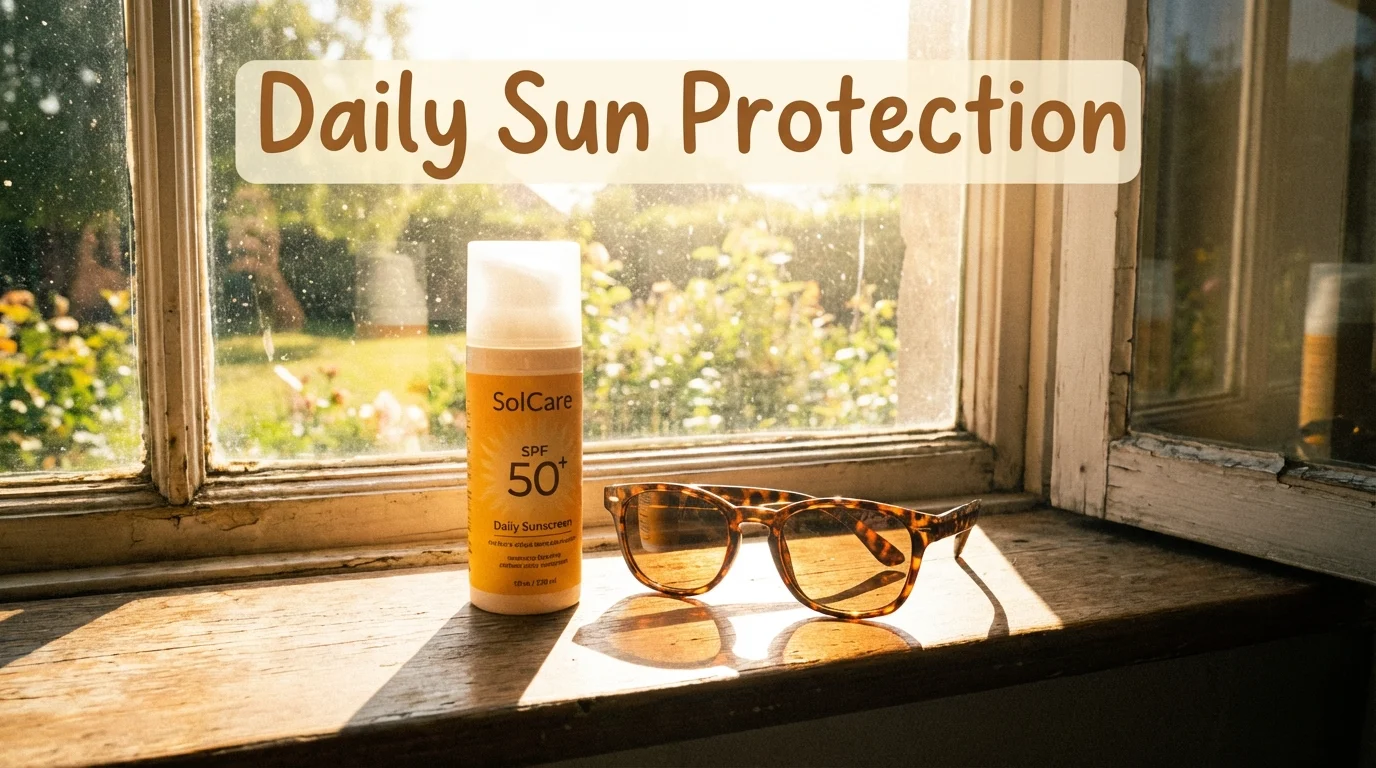
Sunscreen and sunglasses on a windowsill highlighting daily UV protection habits.
If there is one habit that stands above all others in the prevention of photoaging and skin cancer, it is the daily application of broad-spectrum SPF. It is a common misconception that sunscreen is only necessary on bright, summer days. We must recognize that UVA rays, which are responsible for breaking down collagen and causing deep-tissue damage, are present with relatively consistent intensity throughout the year, even through clouds and glass windows.
A long routine filled with expensive anti-aging creams is ultimately futile if the skin is left unprotected from ultraviolet radiation. UV damage accounts for up to 80% of visible skin aging, including fine lines, hyperpigmentation, and loss of elasticity. The habit that truly matters is the reapplication and the use of an adequate amount of product—roughly two fingers' length for the face and neck. When we make SPF a non-negotiable part of our morning, regardless of the weather or our planned activities, we are making the single most effective investment in the longevity of our skin’s youthful appearance.
Hydration from Within and Topical Moisture Retention
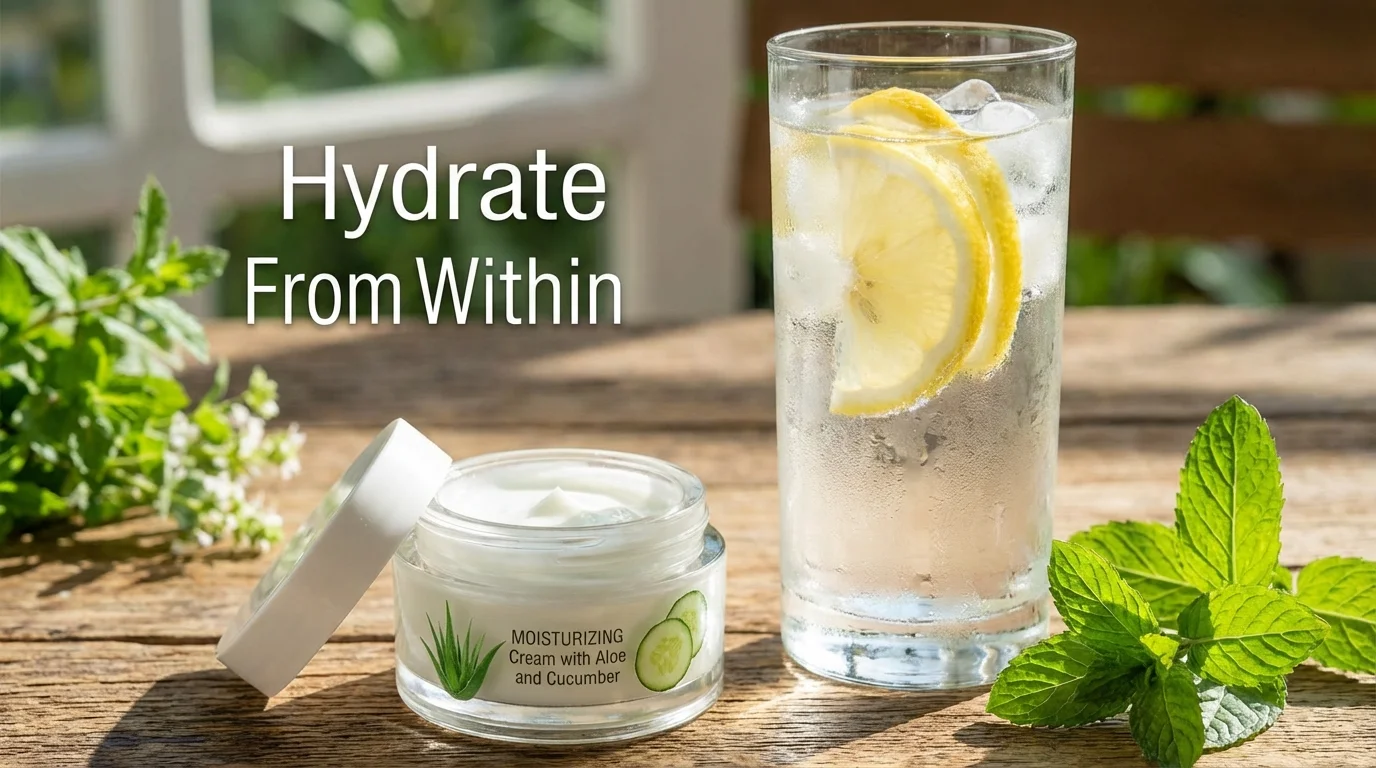
Water and moisturizer representing the habit of internal and external hydration.
While topical moisturizers are essential for trapping water in the stratum corneum, the actual hydration level of our skin is deeply influenced by our internal fluid intake. We emphasize that topical products work as occlusives, emollients, or humectants, but they cannot replace the biological hydration that comes from drinking sufficient water. A habit of consistent hydration supports the skin's elasticity and aids in the detoxification processes managed by the lymphatic system.
Beyond drinking water, the habit of applying moisturizer to damp skin is a game-changer that requires no extra products, only better timing. When we apply lotions or serums immediately after cleansing—while the skin is still slightly moist—we lock in that extra hydration. This prevents transepidermal water loss (TEWL), which is the process where water evaporates from the skin into the surrounding air. By focusing on these moisture-retention habits, we can achieve a "plump" and "dewy" look that no amount of highlighter can truly replicate.
Understanding Your Skin Barrier and When to Rest
Illustration of a strong skin barrier as a vital daily habit.
One of the most detrimental habits we see in the modern era is over-exfoliation. With the accessibility of high-percentage AHAs, BHAs, and physical scrubs, many individuals inadvertently damage their protective barrier in pursuit of instant smoothness. A healthy skin barrier is your first line of defense against irritants, bacteria, and allergens. When this barrier is compromised, it leads to redness, stinging, and chronic inflammation, which accelerates the aging process.
The habit that matters more than a long routine is knowing when to give your skin a rest. We advocate for "recovery nights" where active ingredients like acids or retinols are set aside in favor of barrier-repairing ingredients like ceramides, fatty acids, and cholesterol. Listening to your skin’s signals—such as tightness or localized sensitivity—is a skill that outweighs any prescriptive ten-step plan. By prioritizing barrier integrity, we ensure the skin remains resilient and capable of performing its natural functions efficiently.
The Influence of Sleep and Nutrition on Dermal Radiance
Silk pillowcase and berries representing lifestyle habits for skin health.
The condition of our skin is a direct reflection of our internal physiological state. No topical treatment can fully compensate for a lack of restorative sleep or a diet high in processed sugars. During the deep stages of sleep, the body’s growth hormone levels rise, allowing for cellular repair and the production of new collagen. A consistent habit of 7-9 hours of quality sleep per night is essential for preventing dark circles and maintaining a vibrant complexion.
Similarly, our nutritional choices provide the building blocks for skin cells. Habitually consuming antioxidant-rich foods, healthy fats (like Omega-3s), and vitamins is far more impactful than applying those same nutrients topically in low concentrations. We must remember that the skin is the last organ to receive nutrients from the food we eat, so a nutrient-dense diet is required to ensure enough remains to support dermal health. Reducing sugar intake is particularly important, as sugar contributes to glycation, a process where sugar molecules attach to collagen fibers, making them brittle and leading to premature sagging.
Minimizing Friction and Physical Irritants
A silk pillowcase representing the habit of reducing physical irritation.
Finally, the physical environment our skin interacts with on a daily basis plays a significant role in its overall health. We often overlook the impact of physical friction. For example, the habit of sleeping on a silk or satin pillowcase can significantly reduce the tugging and pulling on the delicate skin of the face and neck, potentially preventing "sleep wrinkles." Furthermore, these materials are less absorbent than cotton, meaning they won't soak up your expensive evening serums.
Other essential physical habits include avoiding the urge to touch or pick at the face, which introduces bacteria and causes micro-trauma, and ensuring that anything that touches the face—such as makeup brushes and phone screens—is kept meticulously clean. These small, disciplined actions prevent breakouts and inflammation more effectively than adding another "clarifying" step to a routine. By cultivating a habit of gentleness in all physical interactions with our skin, we maintain its smoothness and clarity over the long term.
In conclusion, the path to exceptional skin does not require an exhaustive list of products or a complicated morning and evening ritual. Instead, it requires a commitment to the foundational habits that respect the skin’s biology. By prioritizing consistency, sun protection, barrier health, and internal wellness, we create a sustainable environment where our skin can truly thrive. We invite you to strip back the unnecessary and focus on the daily practices that provide real, lasting results. Remember, in the world of skincare, the most powerful tool you have is not a specific bottle, but your own daily discipline.