Effective Workout Routines That Are Easier to Maintain During Busy Weeks
In the modern professional landscape, the most significant barrier to physical health is often not a lack of motivation, but a perceived lack of time. We frequently find ourselves caught in the vortex of demanding deadlines, back-to-back meetings, and domestic responsibilities, leaving little room for traditional ninety-minute gym sessions. However, the notion that fitness requires hours of daily dedication is a misconception that we must dismantle. By shifting our focus from volume to intensity and efficiency, we can develop sustainable habits that persist even during the most chaotic weeks. This article explores the science and methodology behind time-efficient workout routines designed to integrate seamlessly into a high-pressure lifestyle.
The Science of High-Intensity Interval Training (HIIT)
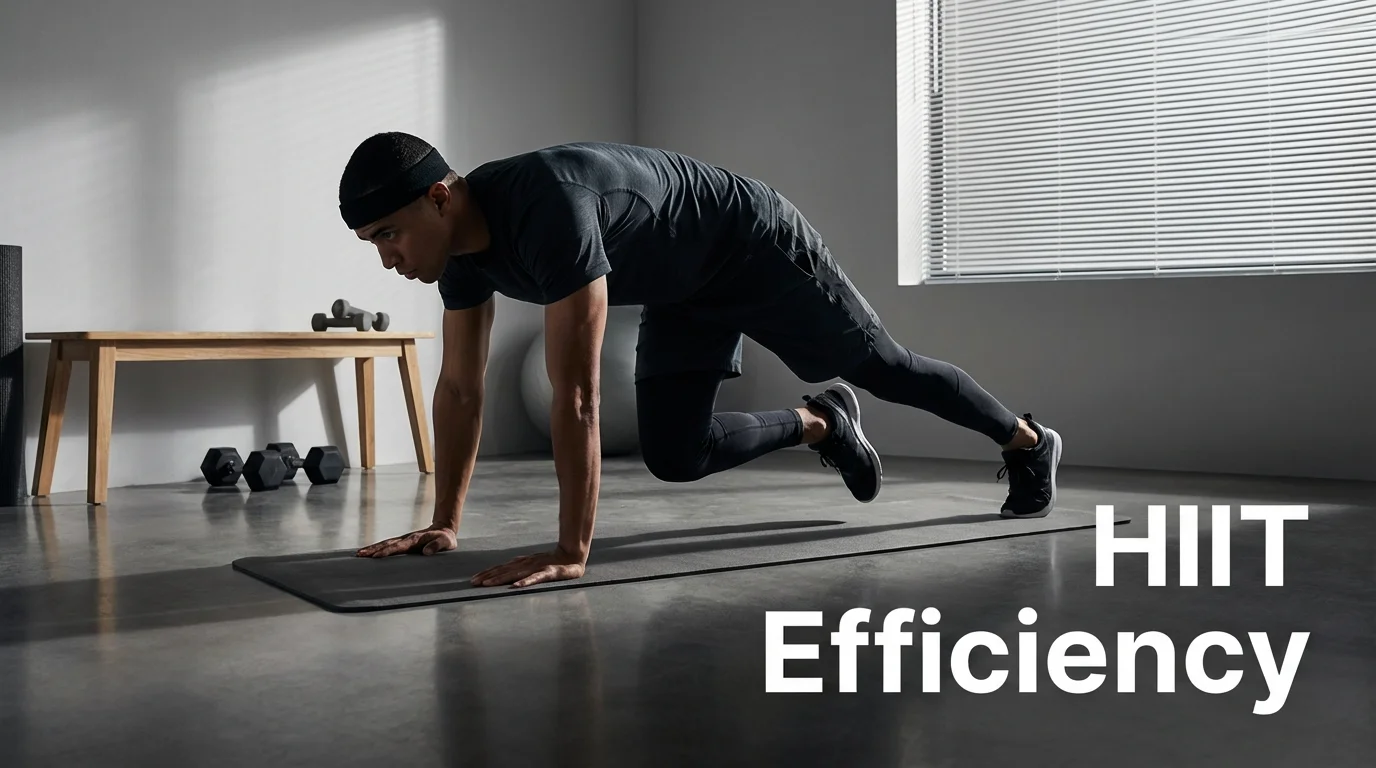
Person performing HIIT mountain climbers in a minimalist gym setting.
When time is our most precious commodity, High-Intensity Interval Training (HIIT) stands as the gold standard for metabolic efficiency. We recognize that traditional steady-state cardio often requires a significant time investment to achieve substantial caloric expenditure. In contrast, HIIT utilizes short bursts of all-out effort followed by brief recovery periods. This methodology triggers a physiological phenomenon known as Excess Post-exercise Oxygen Consumption (EPOC), commonly referred to as the "afterburn effect."
Through EPOC, our bodies continue to consume oxygen and burn calories at an accelerated rate for hours after the workout has concluded. For the busy professional, a 20-minute HIIT session can be more effective for cardiovascular health and fat loss than an hour of moderate-paced walking. We recommend incorporating movements such as sprints, burpees, and high knees to maximize heart rate elevation. The beauty of this approach lies in its versatility; it requires minimal equipment and can be performed in a hotel room, a park, or a small home office. By prioritizing intensity over duration, we ensure that even a twenty-minute window becomes a powerful tool for maintaining physical conditioning.
Embracing Micro-Workouts and Activity Snacking
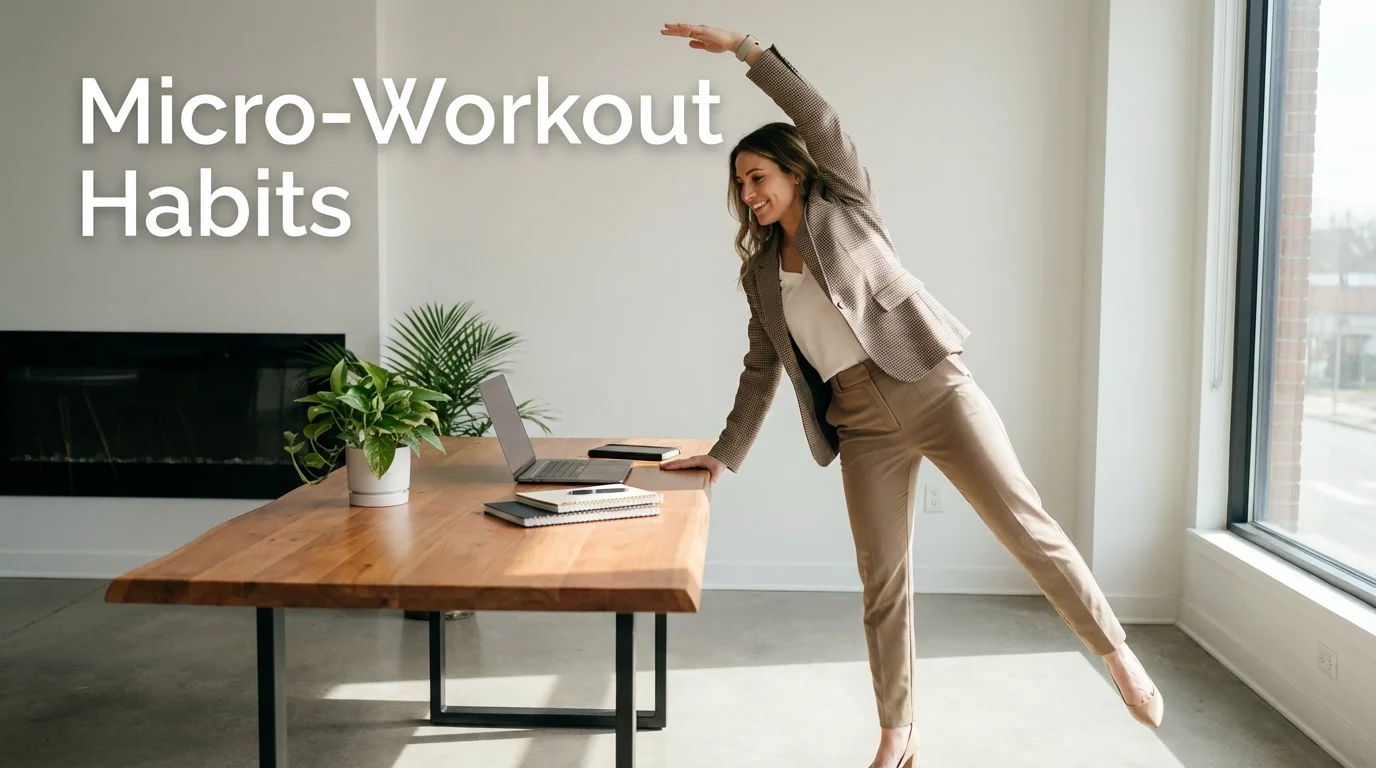
Professional woman performing micro-workouts at her office desk.
The traditional "all-or-nothing" mentality is the enemy of consistency. We often believe that if we cannot complete a full workout, the day is a loss. To counter this, we advocate for the implementation of micro-workouts, also known as "activity snacking." This strategy involves breaking down exercise into bite-sized segments of five to ten minutes, distributed throughout the day.
Research suggests that the cumulative effect of these short bursts is remarkably similar to a single continuous session. We can perform a set of push-ups
before a morning conference call, a series of air squats while waiting for lunch to heat up, and a brisk walk around the block during a mid-afternoon break. These small interventions prevent the sedentary stiffness associated with prolonged desk work and maintain a baseline of metabolic activity. By viewing these moments as opportunities rather than interruptions, we cultivate a lifestyle where movement is integrated into the fabric of our day, making it nearly impossible to "fail" at our fitness goals, regardless of how busy we become.
The Power of Compound Movements for Total Body Strength
Man performing a weighted goblet squat to demonstrate compound movement efficiency.
To optimize strength training during time-constrained periods, we must prioritize compound movements. These are multi-joint exercises that engage several muscle groups simultaneously. Unlike isolation exercises, such as bicep curls or leg extensions, compound lifts provide the "biggest bang for your buck." By focusing on the "Big Five"—squats, deadlifts, presses, rows, and pull-ups—we can stimulate maximum muscle fiber recruitment in a fraction of the time.
A routine centered on compound movements allows us to maintain functional strength and bone density without needing a dozen different machines. For example, a thruster (a combination of a front squat and an overhead press) targets the quadriceps, glutes, core, shoulders, and triceps in one fluid motion. We suggest a "minimalist" strength routine consisting of three compound exercises performed for three sets each. This can be completed in under thirty minutes and provides a comprehensive stimulus that supports hormonal health and lean muscle maintenance. When we simplify our selection of exercises, we reduce the cognitive load of planning a workout, making it significantly easier to execute when mental energy is low.
Utilizing AMRAP and EMOM Strategies for Productivity
A fitness timer and equipment representing structured time-efficient workouts.
Structure is the antidote to procrastination. During busy weeks, we often waste precious time wondering what to do next in the gym. To eliminate this indecision, we utilize structured formats like AMRAP (As Many Rounds As Possible) and EMOM (Every Minute on the Minute). These protocols provide a fixed timeframe and a clear objective, which is essential for maintaining focus when our minds are preoccupied with work.
In an AMRAP session, we set a timer for fifteen or twenty minutes and cycle through a circuit of exercises as many times as possible with good form. This creates a competitive element with ourselves, ensuring high intensity. Conversely, an EMOM workout requires us to perform a specific number of repetitions at the start of every minute. The remaining time in that minute is our rest. This structure enforces a strict work-to-rest ratio and prevents the common pitfall of taking excessively long breaks. We find that these "gamified" workouts are highly effective for busy individuals because they provide a definitive end time, allowing us to schedule them into our calendars with the same precision as a corporate meeting.
Removing Friction with Home-Based Training
A modern home setting with minimal fitness equipment ready for use.
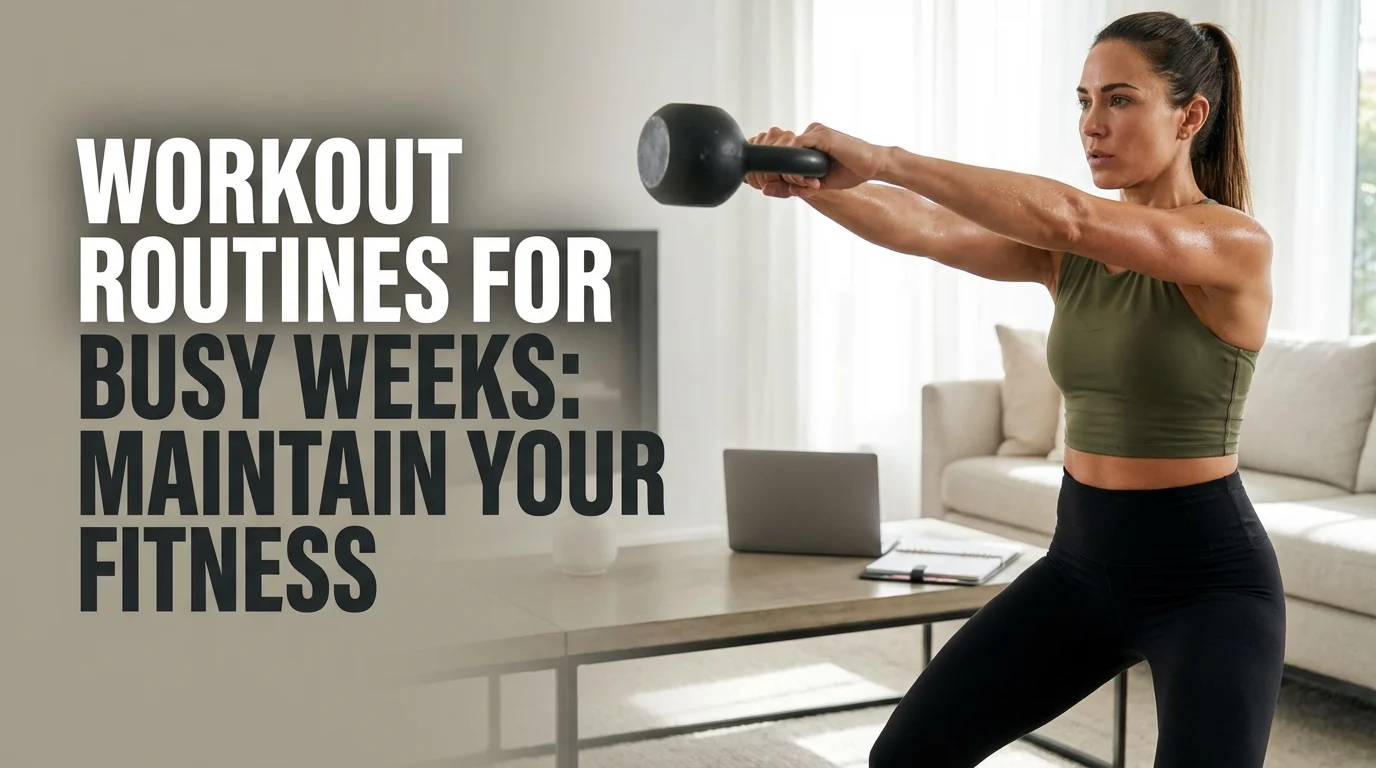
One of the primary reasons workouts are skipped during busy weeks is the friction involved in traveling to a fitness facility. Commuting, finding parking, and waiting for equipment can easily add forty-five minutes to an exercise routine. To maintain consistency, we recommend establishing a home-based training capability. This does not require an expansive garage gym; a simple set of resistance bands, a kettlebell, or even just a yoga mat for bodyweight exercises is sufficient.
By removing the need to leave the house, we reclaim valuable time. We can transition from a video call to a workout in less than five minutes. This convenience is a powerful psychological tool; when the "cost" of starting a workout is low, our resistance to it diminishes. We encourage our readers to view their living space as a versatile performance center. During peak busy periods, the ability to exercise in our own environment is often the deciding factor between a successful workout and a missed opportunity. Consistency is born from convenience, and home-based routines provide the ultimate path of least resistance.
Mental Reframing and Strategic Scheduling
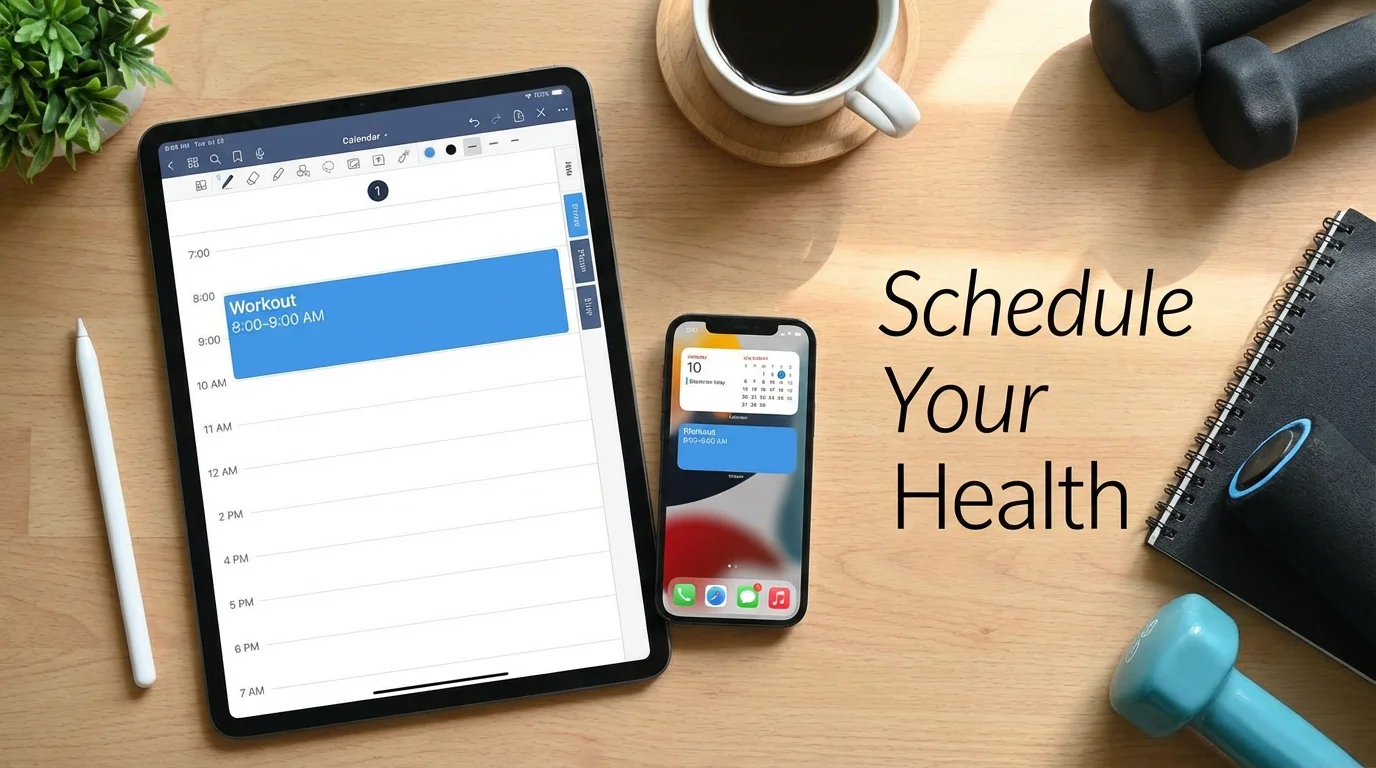
A digital planner showing a scheduled workout block to emphasize planning.
Success in maintaining a fitness routine during a hectic week is as much about psychology as it is about physiology. We must reframe our perspective on exercise, viewing it not as an optional luxury, but as a non-negotiable productivity tool. Physical activity increases blood flow to the brain, enhances cognitive function, and reduces cortisol levels. Therefore, working out actually makes us better at our jobs.
We recommend time-blocking workouts in a digital calendar just as we would a high-stakes meeting. When we see a "Fitness Session" blocked out from 7:00 AM to 7:30 AM, we are less likely to schedule over it. Furthermore, we should adopt the "ten-minute rule": tell yourself you will only exercise for ten minutes. Usually, once the momentum is established, we find the energy to continue. However, even if we stop at ten minutes, we have maintained the habit loop. By treating our health with the same professional rigor as our careers, we ensure that physical well-being remains a priority, even when the pressure is at its peak.
Nutrition and Recovery for Brief, Intense Sessions
A healthy meal prep container showing balanced nutrition for recovery.
When our workout volume decreases during busy weeks, our nutritional precision must increase. We cannot rely on exercise to "buffer" a poor diet if we are only training for twenty minutes a day. To support our brief but intense sessions, we focus on nutrient density and proper hydration. Consuming adequate protein is essential for muscle repair, especially when we are utilizing high-intensity compound movements.
Furthermore, we must not neglect recovery. Stress from work combined with high-intensity training can lead to burnout if we are not careful. We advocate for prioritizing sleep quality and incorporating active recovery, such as gentle stretching or a slow walk, during our rest days. We must remember that the body does not get stronger during the workout itself, but during the recovery period that follows. By fueling correctly and respecting our body's need for rest, we maximize the results of our time-efficient routines and ensure we have the energy required to tackle both our fitness goals and our professional obligations.
Conclusion: The Path to Sustainable Consistency
In conclusion, maintaining a workout routine during busy weeks is not about finding more time; it is about making better use of the time we have. By embracing HIIT, prioritizing compound movements, utilizing micro-workouts, and removing the friction of the gym commute, we create a resilient fitness practice. We have seen that a structured, intense, and brief approach is often more sustainable in the long term than sporadic, lengthy sessions.
We encourage you to look at your upcoming week and identify the small windows where you can insert intentional movement. Whether it is a fifteen-minute AMRAP in your living room or a series of activity snacks throughout the office day, every effort counts toward your long-term health. The goal is not perfection, but unwavering consistency. By adopting these strategies, we transform exercise from a source of stress into a powerful ally that sustains our energy, focus, and vitality, regardless of the demands of the world around us. Let us commit to the philosophy that our health is the foundation upon which all our other successes are built.