Why Your Vitamin C Serum Isn't Working: The Common Storage Mistake Ruining Your Glow
3D molecular structure of L-ascorbic acid representing Vitamin C stability.
We have all been there: investing in a high-priced, medical-grade Vitamin C serum with the hopes of achieving that elusive, lit-from-within radiance, only to find that after a few weeks, the results remain stagnant. We meticulously apply it every morning, yet our hyperpigmentation persists, and our skin tone remains lackluster. While many factors contribute to skincare efficacy, we have identified one primary culprit that renders even the most expensive formulations useless: improper storage.
Vitamin C, particularly in its most potent form as L-ascorbic acid, is a notoriously unstable molecule. It is the "diva" of the skincare world—highly effective but incredibly temperamental. When we fail to respect its environmental requirements, the serum undergoes a chemical process known as oxidation. Once oxidized, the serum does not just lose its potency; it can potentially become pro-oxidant, causing the very oxidative stress we are trying to prevent. In this comprehensive guide, we will explore the science of Vitamin C stability and the critical storage errors that are sabotaging your skincare journey.
The Science of Vitamin C and Why Stability Matters
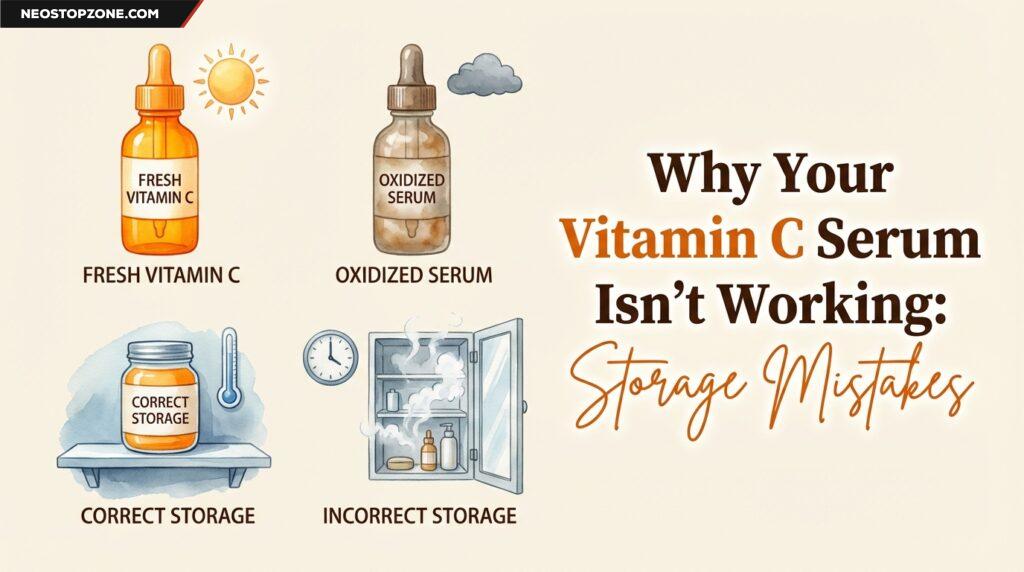
Comparison between fresh clear Vitamin C serum and oxidized orange serum.
To understand why storage is paramount, we must first examine the chemical nature of L-ascorbic acid. As a potent antioxidant, Vitamin C works by neutralizing free radicals—unstable atoms that damage skin cells and accelerate aging. However, the same chemical properties that allow Vitamin C to donate electrons to free radicals also make it highly susceptible to reacting with the environment.
When we expose Vitamin C to the atmosphere, it begins a downward trajectory of degradation. We focus on L-ascorbic acid because it is the most biologically active form of Vitamin C, capable of penetrating the skin barrier to stimulate collagen synthesis and inhibit melanogenesis. Yet, this form requires a very specific low pH environment (typically below 3.5) to remain stable. Any shift in this environment—be it through temperature changes or light exposure—triggers a breakdown. We must recognize that a stable serum is a functional serum. Without stability, we are simply applying an expensive, colored liquid to our faces without any therapeutic benefit.
Understanding Oxidation: The Silent Killer of Skincare Efficacy
Vitamin C serum bottle stored in a humid, bright bathroom environment.
The process of oxidation is the primary reason your serum stops working. We can think of oxidation as the "rusting" of your skincare. Just as an apple turns brown when left on the counter, Vitamin C turns from a clear or pale straw color to a dark yellow, orange, or even brown. This color shift indicates that the L-ascorbic acid has converted into dehydroascorbic acid (DHAA).
While DHAA can technically be converted back to Vitamin C within the skin, further degradation leads to the formation of diketogulonic acid, which is completely useless for the skin. We often see users continue to use an orange serum, believing it still holds some value. However, we must emphasize that using oxidized Vitamin C can be counterproductive. It may cause irritation, clog pores, or lead to a temporary staining of the skin that mimics a "fake tan" effect. If we want the benefits of photoprotection and anti-aging, we must ensure our serum remains in its unoxidized state.
The Fatal Error: Common Storage Mistakes You Are Making
Macro view of a degraded, brown Vitamin C serum drop.
The most common mistake we observe is storing Vitamin C serums in the bathroom cabinet or on an open vanity. While it seems convenient to keep our skincare where we perform our rituals, the bathroom is the worst possible environment for active ingredients. The constant fluctuations in temperature and humidity caused by hot showers create a volatile atmosphere.
Every time we open the bottle, we introduce a fresh supply of oxygen. If the bottle is stored in a warm room, the rate of the chemical reaction between the oxygen and the Vitamin C accelerates. Furthermore, many of us leave our bottles near windows where ultraviolet (UV) light can penetrate the packaging. Even "protected" glass can suffer if the light exposure is consistent. We are essentially cooking our serum before it ever touches our skin. To maintain the integrity of our antioxidant serums, we must treat them with the same care we give to perishable food or fine wine.
How to Identify if Your Vitamin C Serum Has Gone Bad
A modern skincare fridge used for storing Vitamin C serums.
We encourage every skincare enthusiast to perform a "sensory check" on their products regularly. The first sign of trouble is always color change. A fresh, high-quality L-ascorbic acid serum should be crystal clear or have a very faint champagne tint. If we notice it shifting toward a "canary yellow," it is beginning to lose its punch. Once it reaches a deep amber or brown, the product is functionally dead.
Beyond color, we should also pay attention to the scent. Some Vitamin C serums (especially those formulated with Ferulic Acid) naturally have a slightly metallic or "hot dog water" smell. However, if that scent becomes sour or significantly more pungent, it indicates chemical instability. Finally, look at the texture. If we notice graininess or crystallization around the rim of the bottle, the formula's balance has been compromised. We must be disciplined enough to discard products that have passed their prime, as the risk of skin irritation outweighs any lingering hope of efficacy.
Optimal Storage Solutions to Protect Your Skincare Investment
Comparison of various skincare packaging types for Vitamin C stability.
To maximize the lifespan of our serum, we recommend two primary strategies. The first, and most effective, is utilizing a skincare fridge or a dedicated section of your main refrigerator. Cold temperatures significantly slow down the kinetic energy of molecules, thereby decelerating the oxidation process. By keeping our serum at a consistent, cool temperature, we can often double its shelf life.
If a refrigerator is not an option, we must seek out the "cool, dark place" often mentioned on labels but rarely respected. This means a drawer in a bedroom or a hallway closet—anywhere away from direct sunlight and steam. Additionally, we should always ensure the cap is tightened immediately after use. We suggest minimizing the time the bottle stays open; some experts even recommend transferring a small amount into a secondary, smaller vial to reduce the oxygen exposure of the main supply. By controlling the environment, we protect the bioavailability of the ingredients.
Choosing the Right Packaging: What to Look for Before Buying
A woman applying Vitamin C serum during her morning skincare routine.
Our responsibility starts at the point of purchase. We must be discerning consumers when it comes to skincare packaging. Any Vitamin C serum sold in a clear glass bottle is a red flag. Clear glass allows UV radiation to break down the formula almost instantly. We should prioritize dark amber, cobalt blue, or opaque black glass, which filters out harmful light waves.
Even better than tinted glass are airless pump dispensers. Dropper bottles, while popular, are inherently flawed because they require us to expose the entire contents of the bottle to the air every time we use them. An airless pump uses a vacuum mechanism to dispense the product without introducing oxygen back into the container. Furthermore, we should look for formulations that include stabilizing co-antioxidants such as Vitamin E (Tocopherol) and Ferulic Acid. We have found that this specific trio not only stabilizes the Vitamin C but also doubles its photoprotective capabilities.
Maximizing Results: How to Use Vitamin C Correctly
Skincare bottles arranged around a Vitamin C FAQ heading.
Once we have secured a stable product and stored it correctly, we must ensure our application technique is optimized. We recommend applying Vitamin C serum in the morning. While it works at night to repair skin, its primary value lies in its ability to act as a second line of defense against environmental stressors like pollution and UV rays throughout the day.
We should apply the serum to clean, dry skin. Water can sometimes alter the pH of the serum upon contact, potentially reducing its penetration. We advise waiting approximately 60 to 90 seconds for the serum to fully absorb before layering subsequent products. Crucially, we must always follow Vitamin C with a broad-spectrum SPF. Vitamin C and sunscreen have a synergistic relationship; the antioxidant neutralizes the free radicals that the sunscreen might miss, providing a comprehensive shield for our skin's collagen and elastin fibers.
Frequently Asked Questions About Vitamin C Serum Maintenance
A woman with glowing skin holding a properly stored Vitamin C serum bottle.
Does the percentage of Vitamin C matter for stability?
In our experience, higher concentrations (between 10% and 20%) are more effective but can also be more prone to causing irritation if the product begins to degrade. We find that a 15% concentration is the "sweet spot" for most skin types, offering a balance of potency and stability.
Can I still use my serum if it is light yellow?
A pale yellow tint usually indicates that a small percentage of the Vitamin C has oxidized. We believe it is still safe to use at this stage, though it may be slightly less potent. However, we should accelerate our use of the product at this point before it degrades further.
How long does a typical Vitamin C serum last?
Generally, we expect a high-quality L-ascorbic acid serum to remain stable for 3 to 6 months after opening, provided it is stored in a cool, dark place. If kept in a refrigerator, we have seen some formulations remain pristine for up to 9 months.
Is Vitamin C powder more stable than serum?
Yes, Vitamin C in powder form is significantly more stable because it is not in an aqueous (water-based) solution where oxidation occurs most rapidly. However, we must be careful with DIY mixing, as it is difficult to achieve the correct pH level at home, which can lead to chemical burns or lack of penetration.
Conclusion: Honoring the Potency of Your Skincare
We invest a significant amount of time and resources into our skincare routines, and it is only logical that we take the necessary steps to protect those investments. The "glow" we seek is a result of active molecular chemistry interacting with our biology. When we allow our Vitamin C to oxidize through poor storage habits, we are essentially discarding the very benefits we desire.
By shifting our habits—moving our serums out of the bathroom, choosing airless packaging, and monitoring for signs of oxidation—we can ensure that every drop of serum delivered to our skin is potent, stable, and effective. Let us treat our skincare with the clinical respect it requires, ensuring that our path to a radiant, youthful complexion remains unhindered by common, preventable mistakes. We have the power to maintain our glow; it simply starts with where we place the bottle.