Why Fit and Fabric Matter More Than Chasing New Styles
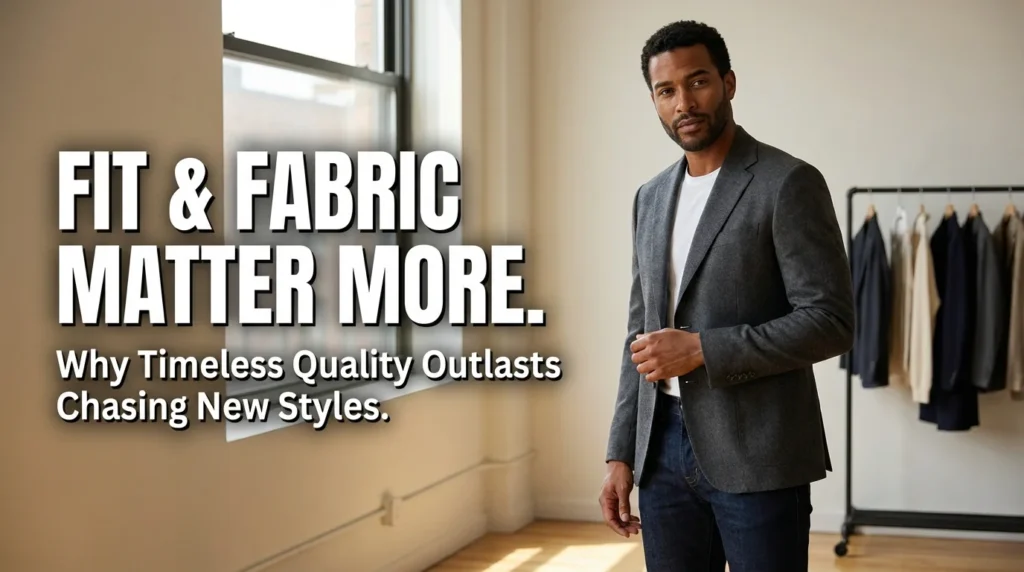
In the contemporary landscape of rapidly shifting fashion cycles, we often find ourselves overwhelmed by the sheer volume of "must-have" trends that dominate our digital feeds. However, as we observe the evolution of personal style, it becomes increasingly evident that the most well-dressed individuals are not those who strictly adhere to the latest runway dictates, but those who prioritize the foundational elements of garment construction. At the heart of a truly sophisticated wardrobe lie two non-negotiable pillars: immaculate fit and superior fabric quality.
We believe that the pursuit of style is an exercise in longevity and self-expression, rather than a race to consume the ephemeral. When we shift our focus from the "what" of fashion to the "how" and the "of what," we unlock a level of sartorial excellence that transcends seasons. This article explores why the technical aspects of clothing—how it drapes on the body and the physical properties of its materials—carry far more weight in the long term than the fleeting aesthetic of a new trend.
The Psychology of Style Over Temporary Fashion Trends
Minimalist wardrobe with high-quality neutral clothing on wooden hangers.
The allure of fast fashion is rooted in a psychological desire for novelty, yet this cycle often leaves us with a closet full of clothes and "nothing to wear." We must recognize that the dopamine hit provided by a new purchase is temporary, whereas the confidence garnered from a perfectly tailored silhouette is enduring. When we choose to ignore the noise of micro-trends, we allow ourselves the space to develop a signature aesthetic that is rooted in comfort and authenticity.
We observe that garments designed to be "trendy" are often constructed with planned obsolescence in mind. They are produced quickly, using patterns that cater to a generic average rather than the nuances of the human form. In contrast, focusing on fit allows the wearer to command a room without saying a word. A well-fitted garment communicates attention to detail, discipline, and self-respect. We argue that the psychological comfort of knowing a garment sits exactly where it should—neither pulling at the seams nor sagging in the seat—is the ultimate luxury.
Furthermore, the constant chase for newness creates a fragmented identity. By prioritizing fabric integrity and fit, we build a cohesive narrative through our clothing. We transition from being consumers of "looks" to being curators of a personal legacy. This shift in mindset encourages us to view our clothing as an investment, not just in financial terms, but in our daily presentation to the world.
Understanding the Architectural Importance of Garment Fit
Technical blueprint of a suit jacket showing garment structure and seam lines.
Clothing is, in many ways, soft architecture. It is the art of creating three-dimensional structures that house the human body in motion. We maintain that even the most expensive designer piece will look subpar if the proportions do not align with the wearer's frame. The difference between a garment that "fits" and one that is "tailored" is the difference between a house and a home; one is a shell, while the other is personalized for optimal function and beauty.
The key areas of fit—the shoulders, the waist, and the hem—serve as the anchors of a silhouette. If a shoulder seam drops too far, the entire structure of a coat collapses, creating an unrefined appearance. If a trouser break is too heavy, it disrupts the visual line of the leg, shortening the wearer’s stature. We emphasize that bespoke or made-to-measure
adjustments are not merely for the elite; they are essential tools for anyone seeking to maximize the potential of their wardrobe.
When a garment fits correctly, it facilitates effortless movement. We often mistake "loose" for "comfortable," but true comfort comes from a garment that moves in harmony with the joints and muscles. High-end tailoring accounts for the pitch of the sleeves and the rise of the trousers, ensuring that the fabric drapes without tension. By prioritizing fit, we ensure that our clothing enhances our natural physical attributes rather than masking them behind layers of ill-proportioned material.
The Science of Fabric: Why Material Choice Dictates Longevity
Macro close-up comparison of silk, wool, and linen textile fibers.
While fit defines the shape, fabric defines the essence. The materials we choose to wear against our skin dictate the breathability, durability, and visual depth of our attire. We must distinguish between natural fibers—such as wool, silk, cotton, and linen—and their synthetic counterparts like polyester and acrylic. Natural fibers possess intrinsic properties that synthetics simply cannot replicate: moisture-wicking capabilities, thermal regulation, and a superior "hand-feel."
We should consider the staple length of fibers when evaluating quality. For instance, long-staple cotton produces a smoother, stronger yarn that resists pilling and becomes softer with every wash. Similarly, high-micron wool provides warmth without the "itch" factor, maintaining its shape over decades of use. When we invest in noble materials, we are investing in the science of textiles. These fabrics age gracefully, developing a patina and character that synthetic materials, which tend to degrade and lose their luster, lack.
The weight and weave of a fabric also play a crucial role in how a garment performs. A heavy-gauge twill will drape differently than a lightweight poplin. We advise looking for fabrics that have a "memory"—the ability to spring back into shape after being stretched or folded. This resilience is a hallmark of high-quality textiles. By choosing superior fabrics, we ensure that our garments remain functional and aesthetically pleasing through years of wear, effectively lowering the cost-per-wear and reducing the need for constant replacements.
Environmental and Economic Impacts of Prioritizing Quality
A brass scale balancing one high-quality coat against a pile of discarded cheap garments.
The global fashion industry is one of the largest polluters, driven by the "disposable" nature of modern trends. We recognize that by prioritizing fit and fabric, we are making a conscious choice to participate in sustainable consumption. A garment that is well-made and fits perfectly is one that is less likely to end up in a landfill. When we buy less but buy better, we directly combat the culture of overproduction and the environmental degradation associated with it.
From an economic perspective, chasing trends is a losing game. The "fast fashion" business model relies on consumers feeling perpetually "behind." By shifting our focus to quality construction, we break this cycle. While the initial investment in a high-quality wool coat or a hand-stitched leather boot may be higher, the durability of these items ensures they will outlast ten cheaper versions. We must view our wardrobe as a portfolio of assets rather than a list of expenses.
Furthermore, supporting brands that prioritize fabric and fit often means supporting ethical labor practices. High-quality garments require skilled artisans who are paid fairly for their expertise. When we choose craftsmanship over mass production, we contribute to a more equitable global economy. We believe that true style cannot exist in a vacuum; it must be supported by a foundation of integrity and responsibility.
How to Identify High-Quality Tailoring and Textiles
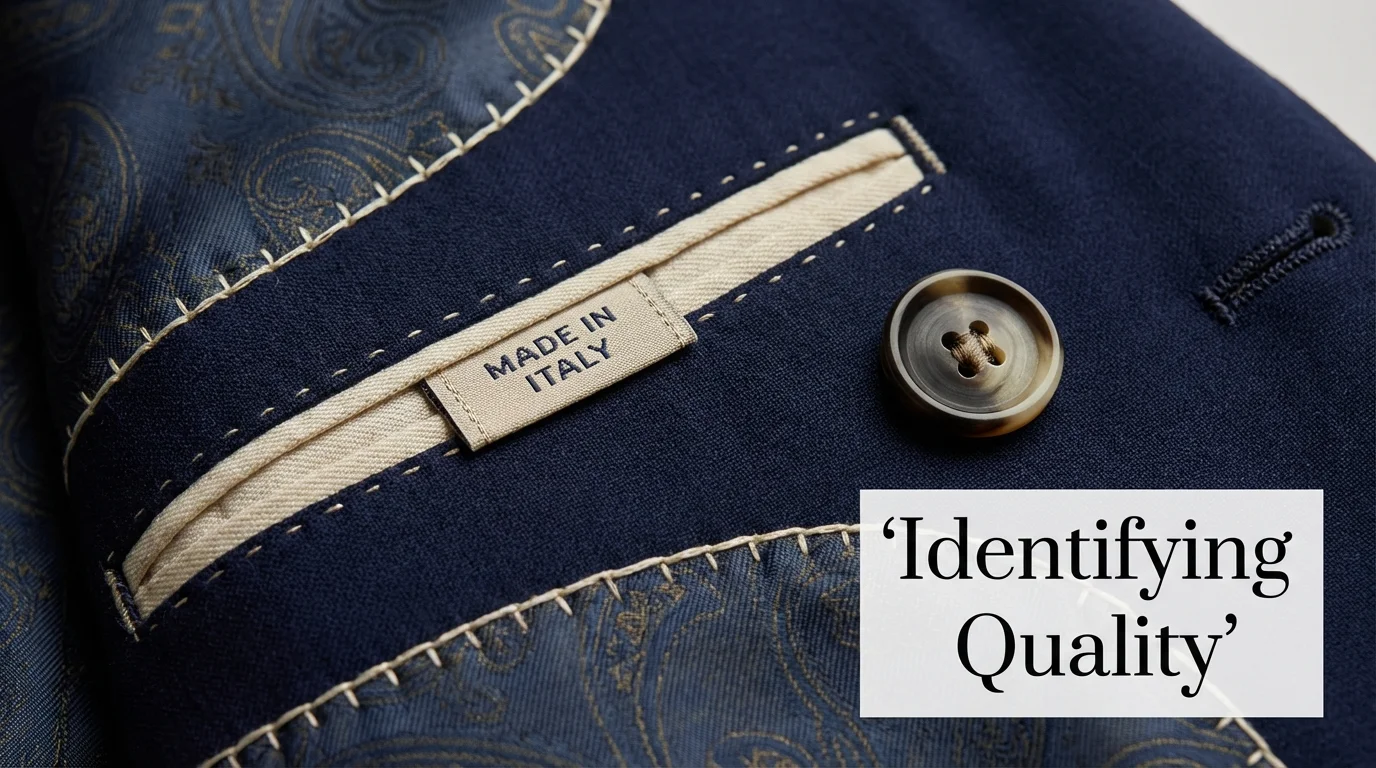
Detailed interior view of high-quality jacket construction and hand-stitching.
To navigate the market effectively, we must develop a "trained eye" for quality indicators. Many brands use marketing jargon to mask mediocre construction. We suggest looking past the label and examining the internal architecture of a garment. For example, a "full canvas" construction in a suit jacket provides a structural integrity that "fused" (glued) jackets lack, allowing the garment to mold to the wearer's body over time.
Check the seam allowances and stitching. High-end garments feature high stitch-per-inch counts, which provide greater strength and a cleaner finish. Look for pattern matching at the seams; in a quality plaid or striped garment, the lines will align perfectly, indicating a meticulous cutting process. We also recommend testing the fabric’s "hand"—it should feel substantial and consistent, without the waxy or "plastic" feel often associated with heavy synthetic blends.
Attention to detail extends to the hardware. Are the buttons made of genuine horn or mother-of-pearl, or are they plastic? Are the buttonholes functional ("surgeon's cuffs") and neatly finished? These small details are often the first things sacrificed in mass production. By scrutinizing these elements, we can ensure that we are paying for genuine craftsmanship rather than just a brand name. We empower ourselves to make informed decisions that prioritize substance over surface-level appeal.
Curating a Timeless Wardrobe Through Discerning Selection
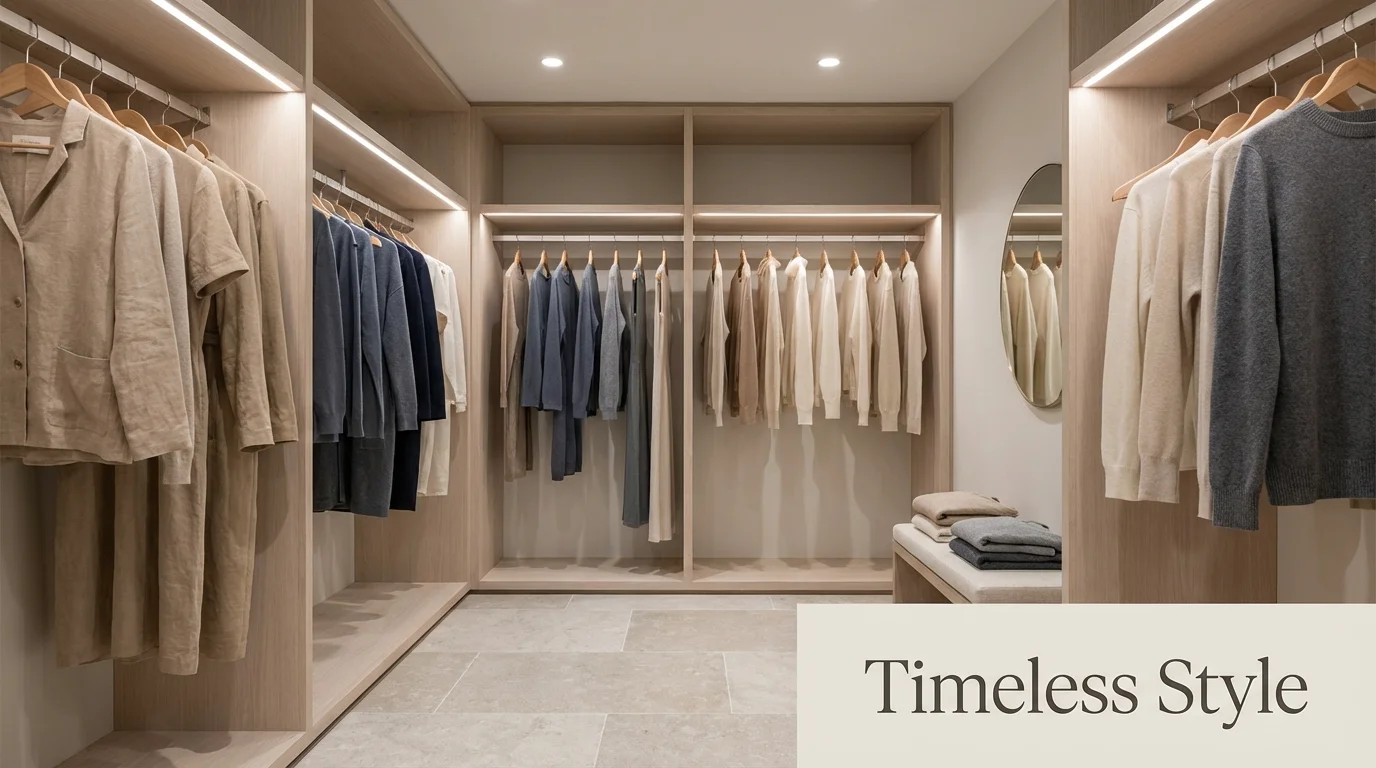
Well-organized closet showing various high-quality textures like cashmere and cotton.
The process of curating a wardrobe is a deliberate act of editing. We suggest starting with a foundation of "hero pieces"—garments that embody excellence in both fit and fabric. These might include a crisp white shirt in Egyptian cotton, a navy blazer in four-season wool, and a pair of perfectly tailored trousers. These items serve as the versatile core upon which an entire style identity can be built.
As we add to our collection, we should ask ourselves: Does this fabric complement my existing pieces? Can the fit be adjusted to perfection? We must resist the urge to buy something simply because it is "in style." Instead, we should look for timeless silhouettes—the trench coat, the Chelsea boot, the cashmere crewneck—that have proven their relevance over decades. These pieces act as a canvas, allowing us to incorporate subtle, modern touches without compromising the structural integrity of our look.
We find that a curated wardrobe leads to a more streamlined and stress-free daily routine. When every item fits impeccably and feels luxurious, the act of getting dressed becomes a source of pleasure rather than a chore. We are no longer fighting our clothes; we are wearing them with unwavering confidence. This disciplined approach to fashion results in a wardrobe that is not only beautiful but also deeply functional and uniquely ours.
Conclusion: Embracing a Legacy of Personal Elegance
In conclusion, we have explored the undeniable truth that fit and fabric are the ultimate arbiters of style. While trends will always come and go, the principles of superior construction and material excellence remain constant. By choosing to invest in garments that honor the human form and utilize the finest fibers, we elevate our personal presentation to an art form.
We encourage a return to discerning consumption. Let us move away from the frantic pace of the fashion cycle and toward a more thoughtful, deliberate engagement with our clothing. When we prioritize the way a garment is made and how it sits on our shoulders, we are not just buying clothes; we are building a legacy of elegance. This is the path to a style that is truly timeless, authentic, and undeniably powerful. In the end, it is not the "newness" of our attire that leaves an impression, but the quality of our presence, mirrored in the quality of what we wear.