Why Daily Routines Matter More Than Occasional Health Resets
A person performing a consistent morning routine with a healthy breakfast and exercise, illustrating why daily routines are better than short-term health resets.
Why Daily Routines Matter More Than Occasional Health Resets
In our modern pursuit of wellness, we often find ourselves captivated by the allure of the grand transformation. We are bombarded with marketing for seven-day detoxes, weekend juice cleanses, and intensive "fitness boot camps" that promise to undo months of sedentary living or poor dietary choices in a matter of hours. While these occasional health resets may provide a temporary psychological boost or a fleeting sense of accomplishment, they rarely address the underlying mechanisms of long-term vitality. We believe that the true foundation of health is not found in the sporadic sprint, but in the rhythmic consistency of daily life.
We observe that the human body is a masterpiece of biological homeostasis, a state of equilibrium that thrives on predictability. When we subject ourselves to extreme, short-term interventions, we often trigger stress responses that can be counterproductive to our ultimate goals. Conversely, when we implement sustainable daily routines, we align ourselves with our natural biological rhythms, allowing for gradual, profound, and permanent improvements in physical and mental well-being. This article explores the scientific, psychological, and practical reasons why the daily routine is the ultimate catalyst for a life of sustained health.
The Biological Power of Circadian Rhythms and Homeostasis
Illustration of the human circadian rhythm synchronized with sunlight.
The primary reason daily routines are so effective is their alignment with our circadian rhythms. These internal 24-hour clocks regulate everything from hormone secretion and body temperature to digestion and sleep-wake cycles. When we maintain a consistent daily schedule—waking at the same time, eating at regular intervals, and exercising during optimal windows—we minimize internal friction. We allow our bodies to anticipate needs rather than constantly reacting to unpredictable stimuli.
For instance, consider the regulation of cortisol and melatonin. A stable morning routine that includes exposure to natural light helps calibrate the morning cortisol spike, providing us with alertness and energy. Simultaneously, it sets the stage for melatonin production in the evening. Occasional "resets" that involve radical changes in sleep or activity levels often disrupt this delicate balance, leading to circadian misalignment. This misalignment is linked to increased risks of metabolic syndrome, cardiovascular issues, and cognitive decline. By prioritizing a rhythmic lifestyle, we ensure that our biological processes operate at peak efficiency without the need for drastic, stressful interventions.
Furthermore, the concept of homeostasis dictates that the body will always attempt to return to its "set point." When we engage in an extreme health reset—such as a sudden, severe caloric deficit—our bodies often perceive this as a period of famine. In response, the metabolism slows down, and hunger hormones like ghrelin increase. This is why many people experience a "rebound" effect after a cleanse. A daily routine, however, works within the bounds of homeostasis. By making small, incremental adjustments that the body can easily integrate, we move our health "set point" higher over time without triggering the body’s survival-based defense mechanisms.
Reducing Decision Fatigue Through Habitual Structure
A marble balanced on a beam symbolizing the body’s state of homeostasis.
Psychologically, the greatest enemy of a healthy lifestyle is decision fatigue. Every day, we are faced with hundreds of choices: what to eat, when to move, how to respond to stress, and when to sleep. Each choice consumes a portion of our finite cognitive resources. By the time evening arrives, many of us have exhausted our "willpower," making us more susceptible to sedentary behavior and poor nutritional choices. This is the inherent flaw in the "reset" model; it requires an intense, unsustainable level of active decision-making and willpower for a short duration.
When we transform health behaviors into automated routines, we bypass the need for willpower altogether. We no longer have to "decide" to go for a walk after dinner or "decide" to drink a glass of water upon waking; these actions become as subconscious as brushing our teeth. This automation of excellence
allows us to preserve our mental energy for more complex tasks, such as professional challenges or creative pursuits.
By establishing a predictable structure, we create a sense of psychological safety. The brain thrives on patterns. When we know exactly how our day will unfold—beginning with a nourishing breakfast and ending with a calming wind-down ritual—we significantly reduce our baseline levels of psychological stress. We move from a state of constant "emergency management" regarding our health into a state of composed mastery. We are not just performing healthy acts; we are becoming healthy people through the power of identity-based habits.
The Counterproductive Trap of Occasional Resets
A minimalist view of a planner and healthy meal representing habit structure.
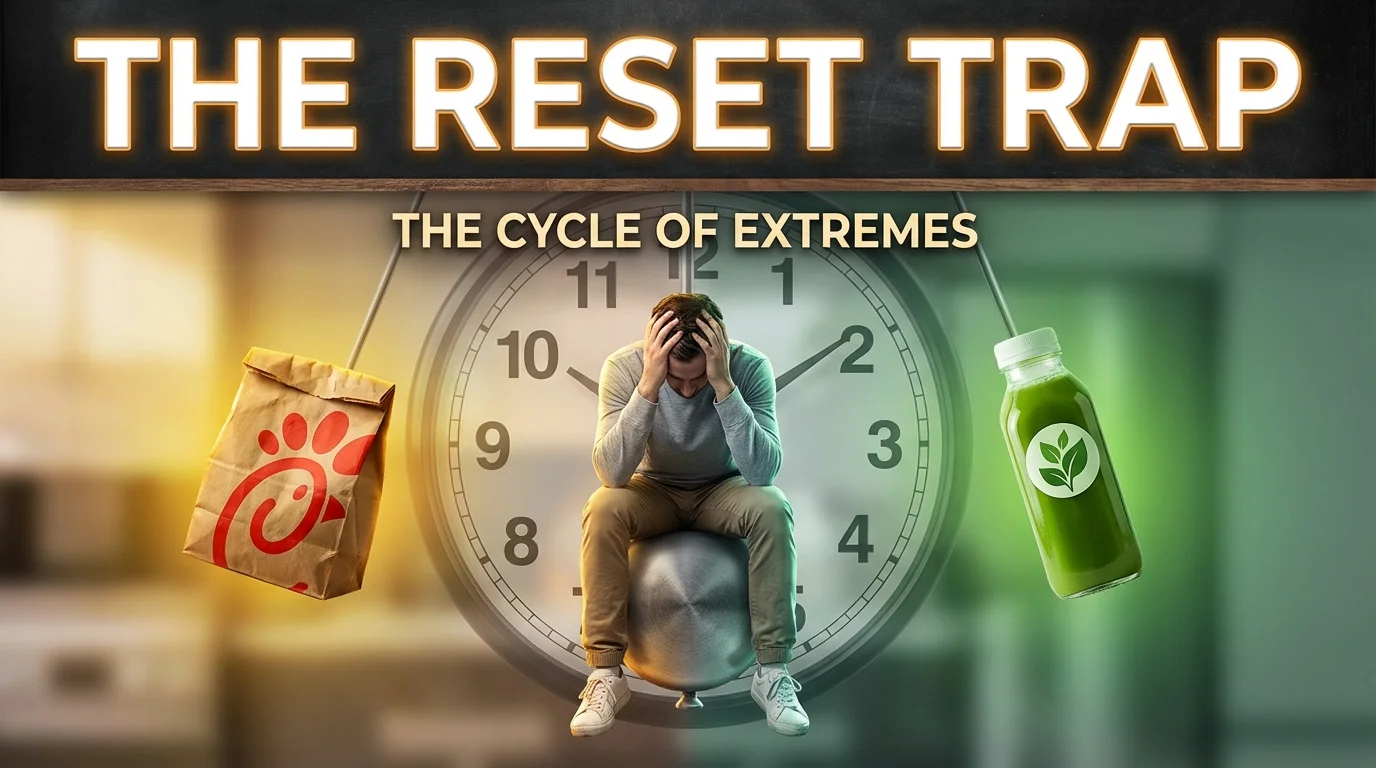
While the "reset" or "detox" is often sold as a way to "kickstart" a healthy life, we find that it frequently functions as a psychological crutch. It creates a permission structure for poor habits during the rest of the year. People may justify weeks of inactivity or inflammatory eating by telling themselves they have a "cleanse" scheduled for next month. This pendulum-swing approach creates a high degree of metabolic and psychological volatility.
Occasional resets often focus on deprivation rather than nourishment. Whether it is cutting out entire food groups or engaging in excessive exercise, these periods are often characterized by a "white-knuckle" endurance. Because the experience is fundamentally unpleasant and restrictive, the brain associates "being healthy" with suffering. Consequently, as soon as the reset period ends, the individual is naturally inclined to return to their old habits as a form of relief. This reinforces the yo-yo cycle, which is notoriously damaging to long-term health.
Moreover, extreme resets can lead to nutritional deficiencies and muscle loss. A rapid weight-loss "detling" protocol often sheds water weight and lean muscle tissue rather than adipose tissue. When the individual returns to normal eating, they often regain the weight as fat, resulting in a higher body fat percentage than before they started the reset. We believe that true detoxification happens every single day through the liver, kidneys, and lymphatic system. These organs do not need a three-day juice fast; they need a consistent intake of fiber, antioxidants, and clean water provided by a stable daily routine.
The Compound Interest of Consistent Healthy Habits
Concept of the cycle between unhealthy habits and extreme resets.
In the world of finance, the most significant wealth is built not through one-time windfalls, but through the compound interest of small, regular investments. We apply this same principle to human biology. A 15-minute walk taken every single day for a year has a far greater impact on cardiovascular health and insulin sensitivity than a 10-hour hiking marathon performed once a year. The cumulative effect of daily habits is what determines our long-term health trajectory.
When we engage in a daily routine, we are essentially making small "deposits" into our health bank account. These deposits include:
Hydration: Maintaining cellular function and cognitive clarity.
Movement: Improving bone density and metabolic flexibility.
Sleep: Facilitating tissue repair and memory consolidation.
Nutrition: Providing the raw materials for cellular regeneration.
The beauty of the compound effect is that it is nonlinear. In the beginning, the results of a daily routine might seem invisible. You may not feel significantly different after three days of drinking more water or sleeping eight hours. However, after six months, the compounded benefits become undeniable. Skin clarity improves, energy levels stabilize, and chronic inflammation decreases. By focusing on the daily process rather than the "reset" event, we allow the power of time to work in our favor. We shift our focus from "losing 10 pounds in 10 days" to "improving our systemic health by 1% every day."
Building a Sustainable Daily Routine for Longevity
Small green sprout symbolizing the compound effect of habits.
Transitioning from a "reset" mindset to a "routine" mindset requires a shift in strategy. We suggest starting with the foundational pillars of health and building outward. A sustainable routine should not be an exhaustive list of chores, but a series of non-negotiable rituals that nourish the body and mind. We recommend focusing on three core areas: the morning start, the midday maintenance, and the evening wind-down.
In the morning, the goal is to prime the nervous system. This might include drinking 500ml of water to rehydrate after sleep, five minutes of light stretching to mobilize the joints, and a high-protein breakfast to stabilize blood sugar. These actions signal to the body that it is safe and fueled for the day ahead.
During the midday, the focus should be on countering the effects of modern sedentary life. We encourage "movement snacks"—short bursts of activity every 60 to 90 minutes. This prevents the "stagnation" of the lymphatic system and keeps the metabolism active. Additionally, a consistent lunchtime helps regulate insulin response, preventing the late-afternoon energy crash that often leads to sugar cravings.
The evening routine is perhaps the most critical for long-term health. It should be designed to facilitate the transition from the sympathetic (fight or flight) to the parasympathetic (rest and digest) nervous system. Reducing blue light exposure, lowering the ambient temperature, and engaging in a relaxing activity like reading or meditation ensures high-quality sleep. Sleep is the ultimate "reset" button provided by nature; when we optimize our daily sleep routine, the need for artificial "health resets" virtually disappears.
Overcoming Obstacles and Embracing Flexibility
Healthy kitchen ingredients representing a sustainable daily routine.
One of the primary reasons people abandon daily routines is the "all-or-nothing" fallacy. We often believe that if we miss one day of exercise or indulge in a celebratory meal, the entire routine is "ruined," leading us back to the desire for a "reset." We must reject this notion. A truly effective daily routine is built on resilient flexibility. It is not a rigid cage, but a supportive framework.
We advocate for the 80/20 rule: if you follow your health-promoting routines 80% of the time, your body will have the metabolic and psychological resilience to handle the other 20% without significant setbacks. The goal of a routine is to make the healthy choice the default choice, not the only choice. When life becomes chaotic—due to travel, work deadlines, or family emergencies—the routine should "scale down" rather than disappear.
For example, if you cannot perform your full 45-minute gym session, a 10-minute bodyweight circuit at home maintains the neurological habit of movement. This keeps the "neural pathways" of the routine active, making it much easier to return to the full version when the chaos subsides. By valuing persistence over perfection, we ensure that our health journey remains sustainable for decades, rather than just weeks.
The Paradigm Shift: From "Doing" a Reset to "Being" Healthy
The obsession with occasional health resets is a symptom of a culture that seeks instant gratification. We want the result without the process. However, the most profound changes in human health occur at the cellular level, over time, through the quiet repetition of positive actions. When we embrace the daily routine, we stop "doing" health and start embodying health.
We have seen that the most successful individuals—those who maintain high energy, cognitive sharpness, and physical vitality well into their later years—rarely talk about detoxes or resets. Instead, they talk about their daily rituals. They understand that their health is the sum total of their daily choices. By choosing the routine over the reset, we take control of our biological destiny. We move away from the stress of "fixing" ourselves and into the joy of continual self-optimization.
In conclusion, while the occasional health reset may offer a temporary spark, it is the steady flame of a daily routine that truly illuminates the path to wellness. We encourage you to look at your daily schedule not as a list of tasks, but as an opportunity to honor your biology. Start small, be consistent, and watch as the compound power of your daily habits transforms your life in ways that a seven-day cleanse never could. The most powerful reset you can ever perform is the one you do every single morning when you wake up and choose your routine.