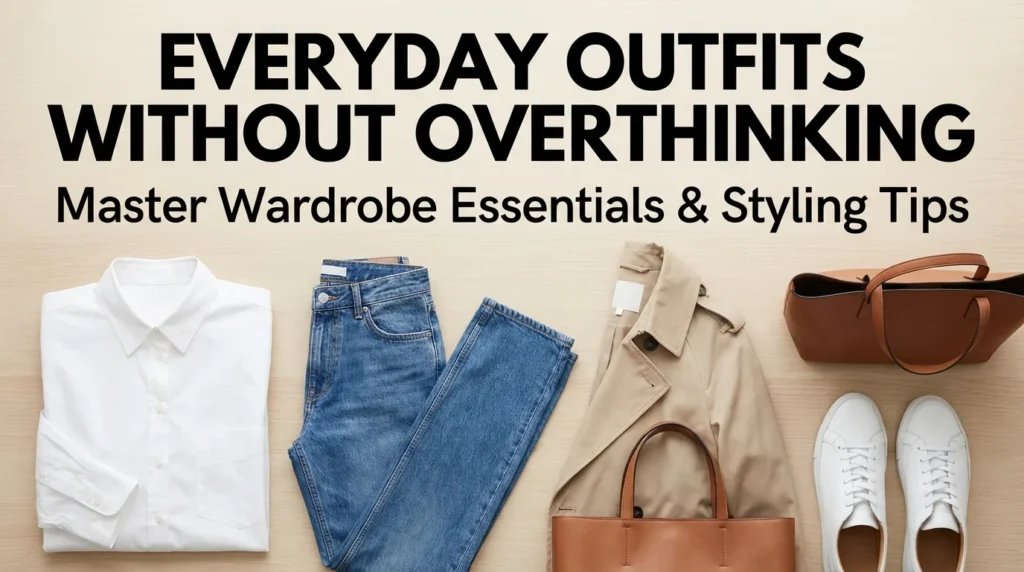
How to Build Everyday Outfits That Don’t Require Overthinking
We have all experienced the frustration of standing before a closet brimming with clothes yet feeling as though we have nothing to wear. This phenomenon, often referred to as decision fatigue, can drain our mental energy before the workday even begins. The secret to mastering your personal style does not lie in the quantity of garments you own, but rather in the strategic assembly of a wardrobe that facilitates effortless choices. By shifting our focus toward functional aesthetics and cohesive design, we can cultivate a daily routine that prioritizes both elegance and efficiency.
Building a wardrobe that eliminates overthinking requires a foundational understanding of personal silhouettes, a commitment to quality materials, and the implementation of repeatable outfit formulas. In this comprehensive guide, we examine the systematic approach to curating a selection of garments that work in harmony, ensuring that every combination you reach for results in a polished, intentional look.
Defining Your Core Style Pillars
A woman experiencing decision fatigue while looking at a full closet.
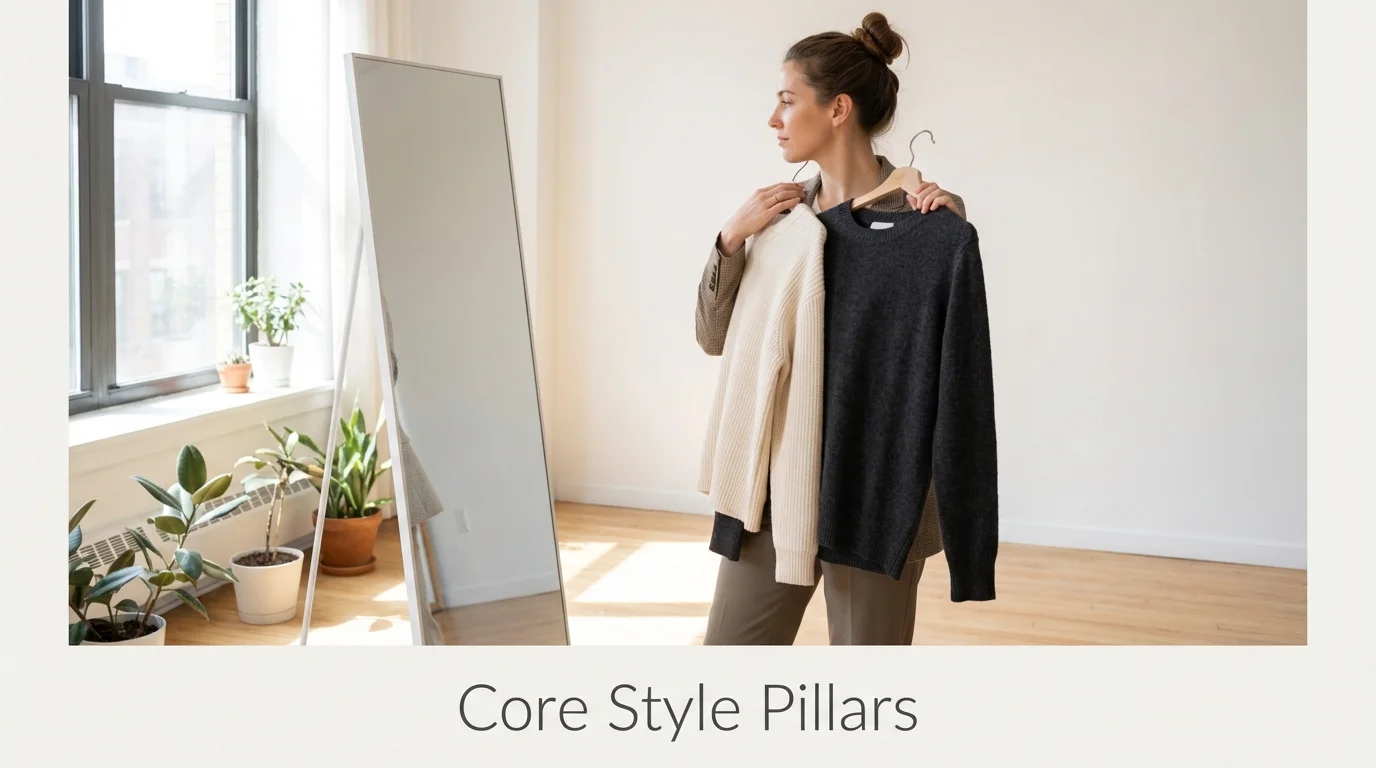
Before we can streamline our dressing process, we must establish our core style pillars. These pillars serve as the analytical framework for every purchase and outfit combination we make. We suggest identifying three to five keywords that describe your desired aesthetic—such as minimalist, structured, bohemian, or classic. When we define these parameters, we effectively narrow the scope of our choices, which is the first step in reducing the cognitive load associated with getting dressed.
Understanding your lifestyle requirements is equally paramount. An individual working in a corporate environment requires a vastly different set of "no-brainer" outfits than someone working in a creative studio or from a home office. We must evaluate our daily activities and ensure our wardrobe reflects our actual reality rather than an aspirational version of it. By aligning our clothes with our daily movements, we ensure that every outfit is not only stylish but also practically viable.
The Essential Foundation: Investing in Quality Basics
Woman defining her core style pillars in front of a mirror.
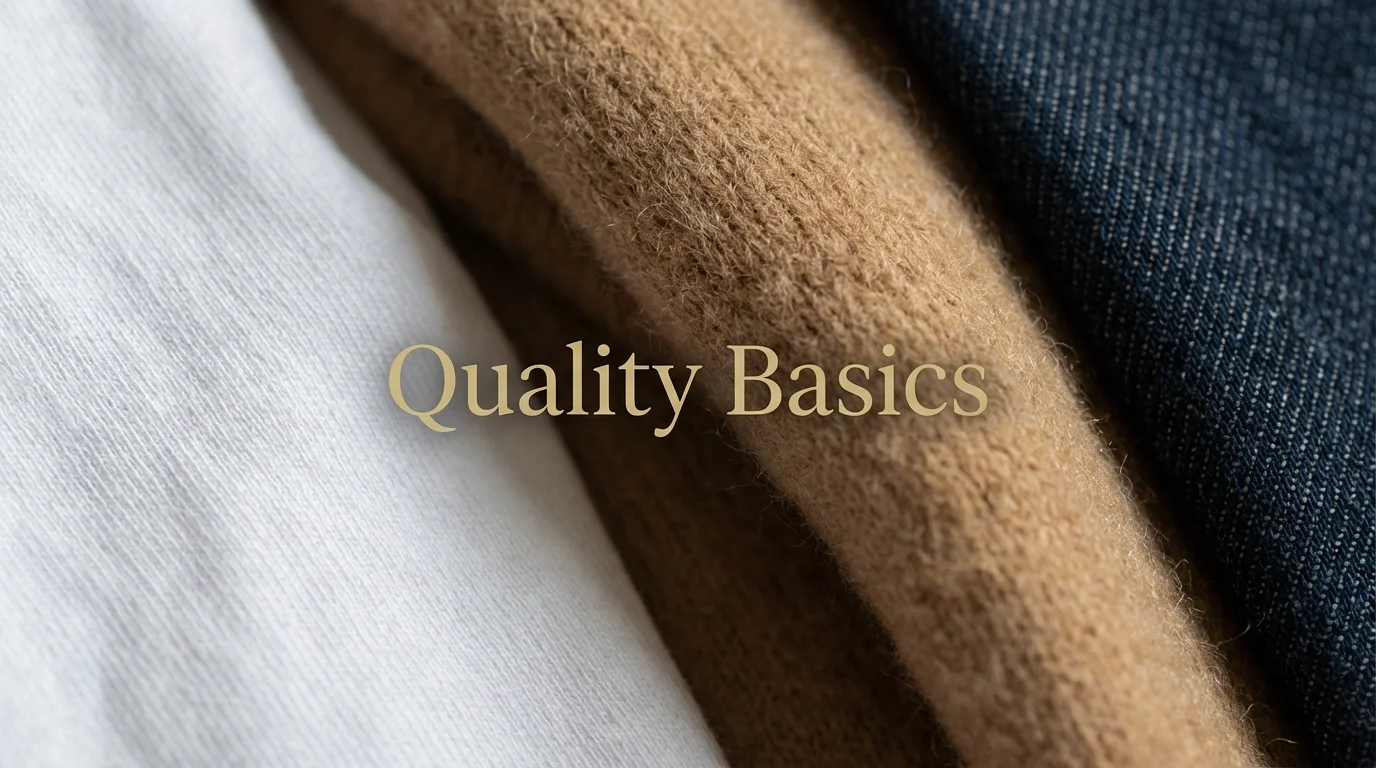
The bedrock of any overthink-free wardrobe is a collection of high-quality basics. These are the "workhorse" items that bridge the gap between different styles and seasons. We advocate for a "fewer, better" philosophy, where we prioritize natural fibers like silk, wool, and organic cotton. These materials not only last longer but also drape better on the body, providing an instant sense of sophistication even in the simplest configurations.
Key essentials include a perfectly tailored white button-down, a versatile crewneck sweater, well-fitted denim in a dark wash, and a structured blazer. When these items are of high quality, they require less styling effort to look "done." A simple pairing of a premium t-shirt and tailored trousers looks intentional because of the fit and fabric
, whereas lower-quality alternatives often require layers of accessories to achieve the same level of polish. By focusing on the integrity of the garment, we simplify the act of dressing.
Master the Art of the Outfit Formula
High-quality fabric textures including cotton, wool, and denim.
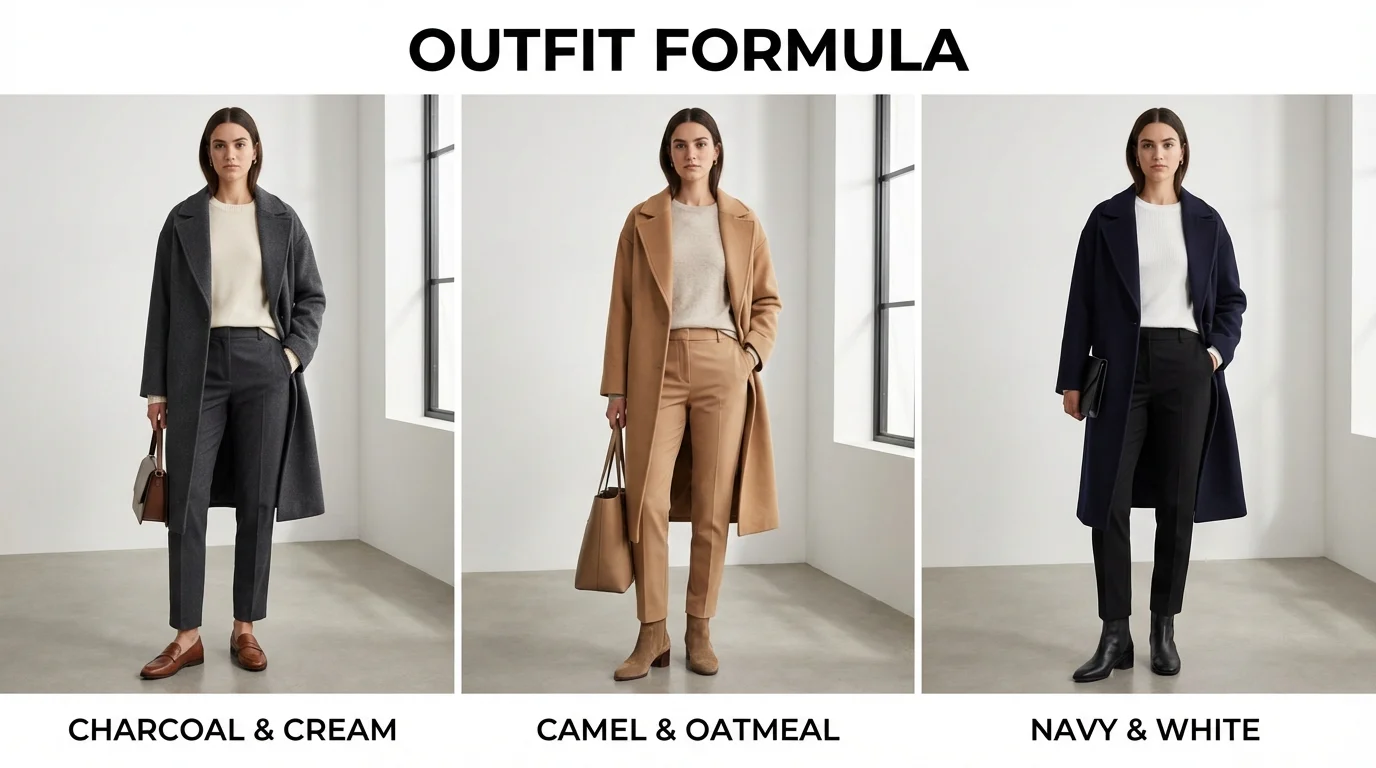
One of the most effective strategies we use to eliminate morning indecision is the outfit formula. An outfit formula is a pre-determined combination of garment types that you know works for your body and your style. For instance, a reliable formula might be straight-leg jeans + an oversized knit + ankle boots. Once we have identified three or four formulas that make us feel confident, the process of "building" an outfit becomes a simple matter of plug-and-play.
We recommend documenting these formulas. Whether through a digital photo album on your phone or a physical list inside your closet door, having a visual reference removes the need for creative inspiration at 7:00 AM. Formulas allow us to experiment with color and texture without compromising the structural integrity of the look. If the silhouette is already proven to be successful, changing a grey sweater for a navy one requires zero mental effort.
Curating a Cohesive Color Palette
Visual representation of a repeatable outfit formula for daily wear.
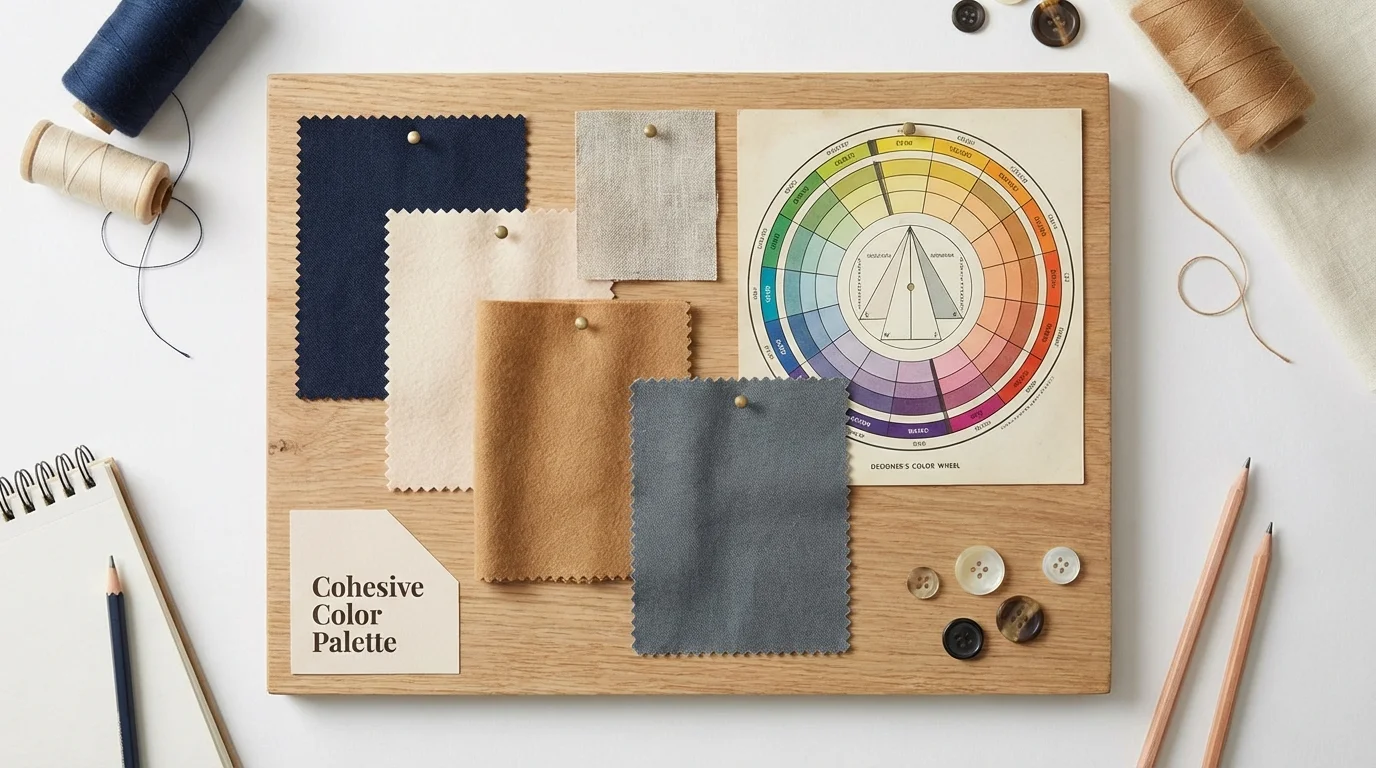
Overthinking often stems from a lack of chromatic harmony within a closet. When garments do not "talk" to each other in terms of color, we are forced to spend time wondering if a specific shade of green clashes with a particular tone of brown. To solve this, we must curate a cohesive color palette. We typically suggest a base of neutrals—black, white, navy, grey, or beige—supplemented by one or two "accent" colors that complement your skin tone.
When the majority of your wardrobe exists within a specific color story, the pieces become interchangeable. This modularity is the ultimate goal of an efficient wardrobe. In a well-coordinated closet, any top should technically pair with any bottom. This interconnectivity ensures that even if you pick items at random, the resulting ensemble will appear deliberate and harmonious.
The Power of Strategic Accessories
Cohesive neutral color palette for a versatile wardrobe.
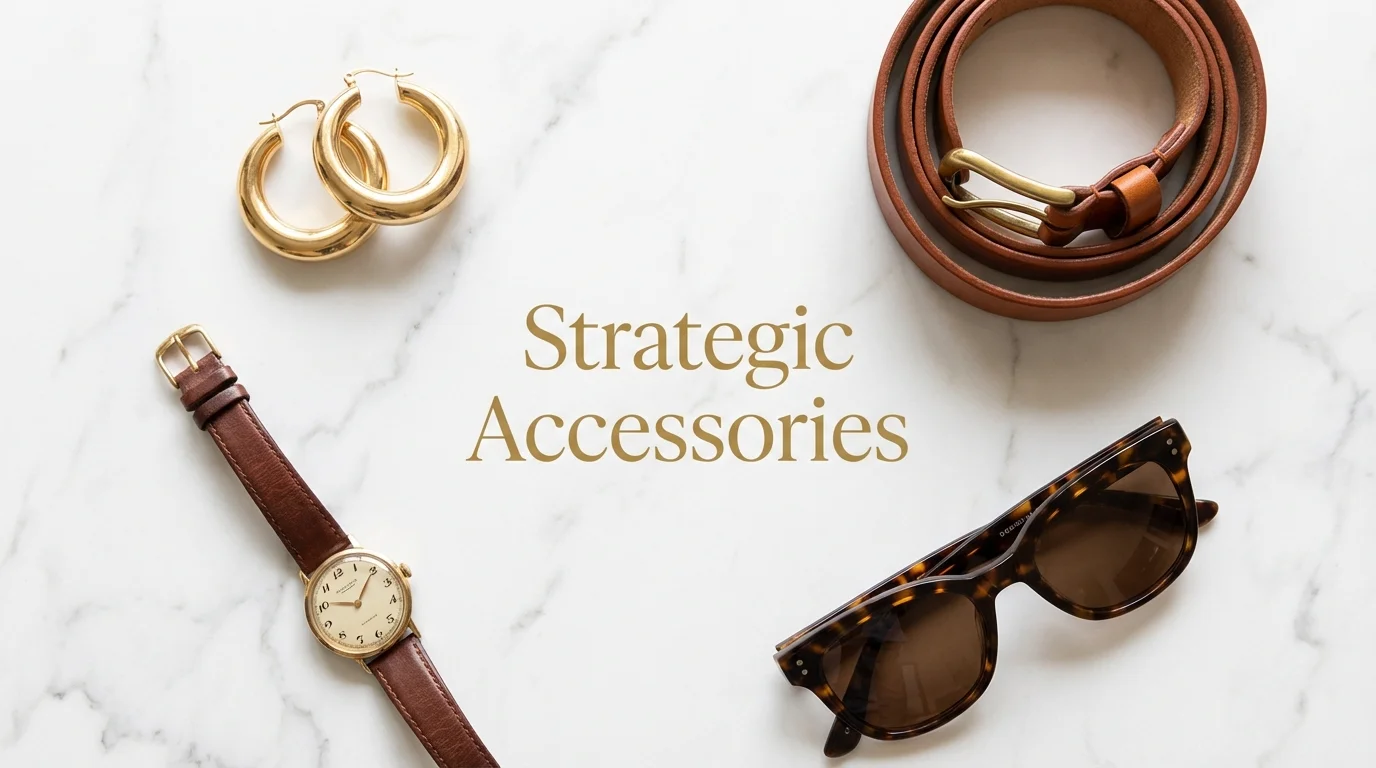
Accessories are the exclamation point of an outfit, yet they are often the source of most overthinking. To avoid this, we recommend selecting a "signature" set of accessories. This might include a specific pair of gold hoops, a leather timepiece, and a versatile tote bag. By having a default set of accessories that work with every one of your outfit formulas, you eliminate the need to "re-accessorize" every single day.
Furthermore, we should view accessories as tools for tonal adjustment. A simple base of trousers and a t-shirt can be transformed from casual to professional simply by swapping sneakers for loafers and adding a structured belt. When we understand the transformative power of these small items, we can keep the clothing itself simple and let the accessories do the heavy lifting of contextualizing the look.
Organizing Your Closet for Daily Success
Strategic gold and leather accessories for elevating everyday outfits.
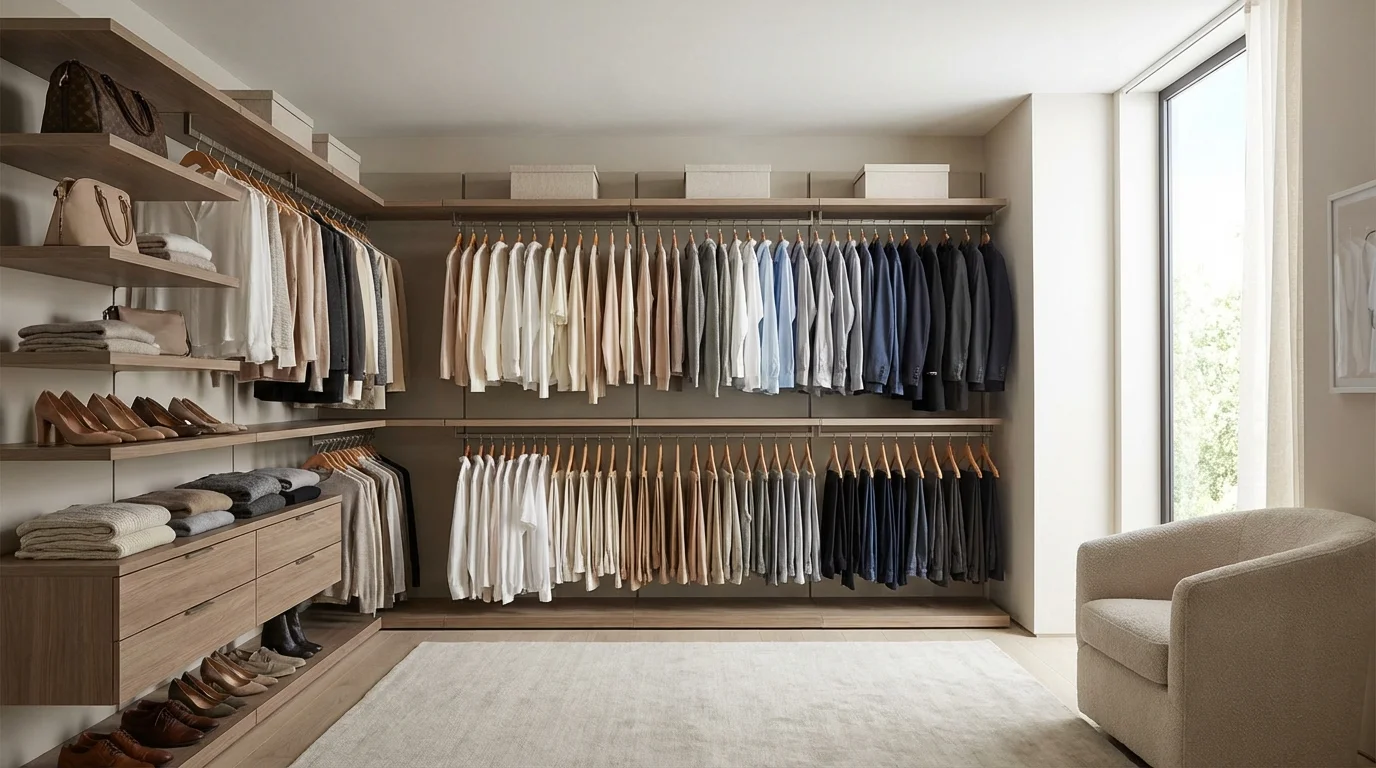
The physical environment in which we get dressed significantly impacts our ability to think clearly. A cluttered, disorganized closet leads to visual noise, making it difficult to identify the pieces we actually want to wear. We believe in the power of visibility. If you cannot see an item, you will not wear it. We suggest organizing your closet by category (tops, bottoms, outerwear) and then by color within those categories.
Using uniform hangers and removing items that no longer fit or serve your current lifestyle creates a streamlined experience. We should treat our closets like a high-end boutique—curated, spacious, and inviting. When our options are clear and easily accessible, the process of building an outfit becomes a tactile pleasure rather than a chore.
Footwear: The Unsung Hero of Daily Ensembles
Impeccably organized closet with color-coded clothing categories.
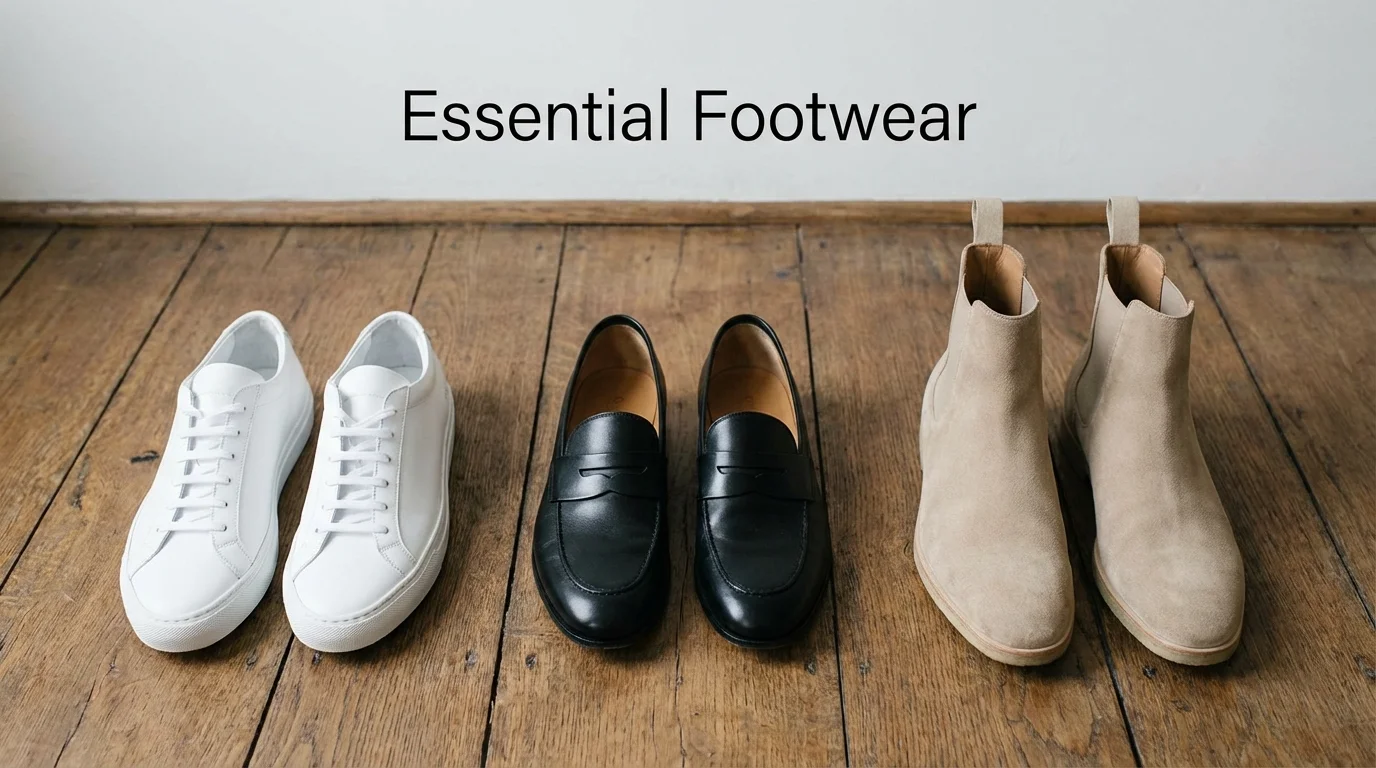
Footwear often dictates the direction of an outfit. To minimize overthinking, we must ensure we have a "hero" shoe for every category of our life. For most, this includes a clean white sneaker for casual days, a polished loafer for professional settings, and a versatile boot for transitional weather. When we have these bases covered, the choice of footwear becomes an automatic response to the day's itinerary.
We should prioritize comfort and durability in our footwear choices. An outfit that looks excellent but causes physical discomfort will ultimately lead to a lack of confidence. By investing in well-constructed shoes and maintaining them through regular cleaning and repair, we ensure that our "finishing touch" always looks as refined as the rest of our ensemble.
Maintaining Your System: The Seasonal Audit
Essential footwear including sneakers, loafers, and boots.
A wardrobe is not a static entity; it is a living system that requires maintenance. We recommend performing a seasonal audit every six months. This involves assessing which items were frequently worn and which remained untouched. By identifying the "failures" in our wardrobe, we can avoid repeating the same purchasing mistakes in the future.
During this audit, we also suggest re-evaluating our formulas. As the weather shifts, our needs change. Transitioning from a "sweater and jeans" formula to a "linen shirt and chinos" formula allows us to maintain our systematic approach regardless of the temperature. This proactive maintenance ensures that our closet remains a source of ease rather than a source of stress as the seasons evolve.
Embracing Confidence through Simplicity
The ultimate goal of building everyday outfits that don’t require overthinking is to free up our mental bandwidth for the things that truly matter. When we step out of the door knowing we look polished and feel comfortable, we carry ourselves with a different level of assurance. Style is not about following every fleeting trend; it is about creating a visual language that is uniquely ours and remarkably easy to speak.
By implementing the strategies of style pillars, outfit formulas, and cohesive color palettes, we transform the daily ritual of dressing from a burden into a seamless transition. We invite you to begin this journey by looking at your closet not as a collection of individual items, but as a unified system designed to support your life. Simplicity is not the absence of style; it is the pinnacle of it.